Fiqh and Blessings of Performing Umrah
Virtues of Umrah and a summary of Fiqh rulings on how to perform Umrah. Taken from the lectures of Shaykh Yasir Qadhi
Sat Oct 04 2025
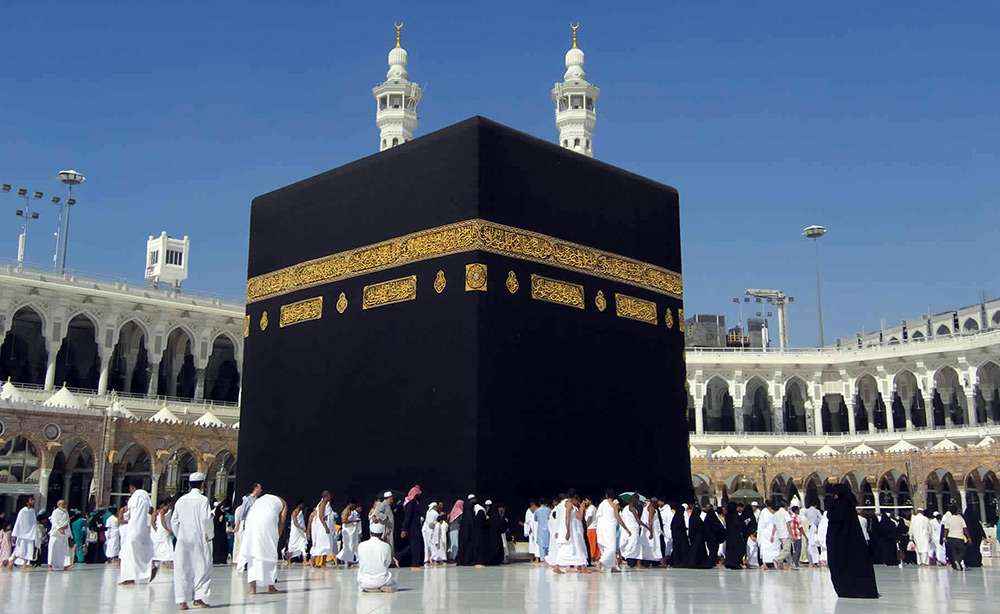
Watch the video: https://www.youtube.com/live/n3prnQUS8KE
This article provides a comprehensive overview of the rituals associated with Umrah, drawing heavily upon the Quran and authenticated Hadith. It thoroughly explains the Kaabah's significance as the sacred house of worship, detailing its various names, historical origins, and foundational purpose as a center for monotheism and security. The text then outlines the meaning of Umrah, its immense spiritual virtues, and the scholarly differences concerning its obligation, emphasizing the reward of performing this pilgrimage. Finally, the article addresses the Fiqh of Umrah, clearly distinguishing the necessary arkan (pillars), the compensatory wajibat (obligations), and the Sunnah practices, alongside practical guidance on topics such as the Miqat boundaries, the sanctity of the Haram al-Makki, and the specific acts of Tawaf and Sa'i.
Table of Contents
- Kaabah
- Meaning of the Kaabah
- Other names of the Kaabah
- First building of the Kaabah
- Purpose of the Kaabah
- Honoring the Kaabah
- Kaabah in Summary
- Umrah
- Fiqh of Umrah
- Pillars (Arkan)
- Obligations (Wajibat)
- Prophetic Practice (Sunnah)
- Fiqh of Umrah in Summary
- Miqat
- Jeddah: Inside the Miqat
- Madinah: Dhu al-Hulayfah
- Makkah: The Hil and the Haram
- Tanim: the Closest Hil
- Miqat in Summary
- Haram al-Makki: The Inner Sanctum
- Other names of the Haram
- Sanctity of the Haram
- Things forbidden in the Haram
- Virtues of the Haram
- Haram al-Makki in Summary
- Ihram
- Ihram Garments
- Sunnahs of Ihram
- Major violations of the Ihram
- Minor violations of the Ihram
- Fidyah for minor violation the state of Ihram
- Talbiyah
- Stopping the Talbiyah
- Ihram in Summary
- Arrival
- Tawaf
- Wudu for Tawaf
- Starting the Tawaf
- Bearing the arms and brisk walking
- Respecting others
- Dhikr during Tawaf
- Counting the Tawaf circuits
- Breaks during Tawaf
- Ending the Tawaf
- Tawaf in Summary
- Corners of the Kaabah
- Hajar al-Aswad (The Black Stone)
- Rukn al-Yamani (Yemeni Corner)
- Multazam
- Hatim
- Tragic history of the damage and rebuilding of the Kaabah
- Corners of the Kaabah in Summary
- Maqam Ibrahim
- Zamzam
- Sa'i
- Starting the Sa'i
- Counting laps of the Sa'i
- Brisk walking in the valley
- Dhikr during Sa'i
- Ending the Sa'i
- Shaving or trimming after Sa'i
- Completion of the Umrah
- Acts after Umrah in Makkah
- Itikaf in the Haram
- Extra Tawafs
- Extra nawafil
- Dua
- Good deeds
- Gazing at the Kaabah
- Praying at the Hotel
- Farewell Tawaf
- Acts after Umrah in Summary
- Menstruation and Umrah
- Performing multiple Umrahs
- Performing Umrah for others
- Umrahs of the Prophet ﷺ
Kaabah
Meaning of the Kaabah
Kaabah is the Holy Sanctuary
﴿جَعَلَ اللَّهُ الْكَعْبَةَ الْبَيْتَ الْحَرَامَ قِيَامًا لِلنَّاسِ… ﴾ (سُورَةُ المَائدة ٥:٩٧)
5:97 Allah has made the Kaabah, the Sacred House, an establishment for mankind
- Primary meaning: a Cubical structure
Other names of the Kaabah
- Bayt: House of Worship
- Bayt Allah: House of Allah, association for it's sanctity and not residence
- Bayt al-Atiq: The ancient house / House of Salvation from Hellfire
- Bayt al-Haram: The Honorable / Sanctified / Forbidden House
- Bayt al-Muharram: The House Made Sanctified / Forbidden
- Qiblah: A direction to be faced for veneration and worship
First building of the Kaabah
The first House of Sanctuary establishment for mankind
﴿إِنَّ أَوَّلَ بَيْتٍ وُضِعَ لِلنَّاسِ لَلَّذِي بِبَكَّةَ مُبَارَكًا وَهُدًى لِلْعَالَمِينَ فِيهِ آيَاتٌ بَيِّنَاتٌ مَقَامُ إِبْرَاهِيمَ ۖ وَمَنْ دَخَلَهُ كَانَ آمِنًا… ﴾ (سُورَةُ آل عِمرَان ٣:٩٦)
3:96 Indeed, the first House ˹of worship˺ established for mankind was that at Makkah - blessed and a guidance for the worlds. 97 In it are clear signs ˹such as˺ the standing place of Abraham. And whoever enters it shall be safe.
Scholarly disagreement on who was the first to build the Kaabah
- Built by angels before earth
- Build by Adam ᴬˢ
- Descended with Adam ᴬˢ and raised during the Noahic flood to become [[Bayt al-Mamur]] in the seventh sky
It's an ancient house
﴿… وَلْيَطَّوَّفُوا بِالْبَيْتِ الْعَتِيقِ ﴾ (سُورَةُ الحَج ٢٢:٢٩)
22:29 Then let them … perform Tawaf around the ancient House that ˹has been commanded˺, and whoever honors the sacred ordinances of Allah - it is best for him in the sight of his Lord…
First house built for worship
﴿فَلْيَعْبُدُوا رَبَّ هَٰذَا الْبَيْتِ الَّذِي أَطْعَمَهُمْ مِنْ جُوعٍ وَآمَنَهُمْ مِنْ خَوْفٍ ﴾ (سُورَةُ قـُرَيْش ١٠٦:٣)
106:3 Let them worship the Lord of this House, 4 Who has fed them, ˹saving them˺ from hunger and made them safe, ˹saving them˺ from fear.
- Kaabah is the first house built for worship ([[Ali b. Abu Talib]], [[Hasan al-Basri]])
Ibrahim ᴬˢ built or rebuilt it on its foundations
﴿وَإِذْ يَرْفَعُ إِبْرَاهِيمُ الْقَوَاعِدَ مِنَ الْبَيْتِ وَإِسْمَاعِيلُ رَبَّنَا تَقَبَّلْ مِنَّا ۖ إِنَّكَ أَنْتَ السَّمِيعُ الْعَلِيمُ ﴾ (سُورَةُ البَقَرَة ٢:١٢٧)
2:127 And ˹mention˺ when Abraham was raising the foundations of the House and ˹with him˺ Ishmael, ˹saying˺, "Our Lord, accept ˹this˺ from us. Indeed You are the Hearing, the Knowing.
Purpose of the Kaabah
Dua of Ibrahim to make Makkah a safe land and make his children free from idolatry
﴿وَإِذْ قَالَ إِبْرَاهِيمُ رَبِّ اجْعَلْ هَٰذَا الْبَلَدَ آمِنًا وَاجْنُبْنِي وَبَنِيَّ أَنْ نَعْبُدَ الْأَصْنَامَ رَبِّ إِنَّهُنَّ أَضْلَلْنَ كَثِيرًا مِنَ النَّاسِ ۖ فَمَنْ تَبِعَنِي فَإِنَّهُ مِنِّي ۖ وَمَنْ عَصَانِي فَإِنَّكَ غَفُورٌ رَحِيمٌ رَبَّنَا إِنِّي أَسْكَنْتُ مِنْ ذُرِّيَّتِي بِوَادٍ غَيْرِ ذِي زَرْعٍ عِنْدَ بَيْتِكَ الْمُحَرَّمِ رَبَّنَا لِيُقِيمُوا الصَّلَاةَ فَاجْعَلْ أَفْئِدَةً مِنَ النَّاسِ تَهْوِي إِلَيْهِمْ وَارْزُقْهُمْ مِنَ الثَّمَرَاتِ لَعَلَّهُمْ يَشْكُرُونَ ﴾ (سُورَةُ إبراهِيم ١٤:٣٥)
14:35 And ˹mention, O Muhammad˺, when Abraham said, "My Lord, make this city ˹Makkah˺ secure and keep me and my sons away from worshipping idols. 36 My Lord, indeed they have led astray many among the people. So whoever follows me - then he is of me; and whoever disobeys me - indeed, You are ˹yet˺ Forgiving and Merciful. 37 Our Lord, I have settled some of my descendants in an uncultivated valley near Your sacred House, our Lord, that they may establish prayer. So make hearts among the people incline toward them and provide for them from the fruits that they might be grateful.
Acceptance of the dua of Ibrahim
﴿وَإِذْ بَوَّأْنَا لِإِبْرَاهِيمَ مَكَانَ الْبَيْتِ أَنْ لَا تُشْرِكْ بِي شَيْئًا وَطَهِّرْ بَيْتِيَ لِلطَّائِفِينَ وَالْقَائِمِينَ وَالرُّكَّعِ السُّجُودِ
وَأَذِّنْ فِي النَّاسِ بِالْحَجِّ يَأْتُوكَ رِجَالًا وَعَلَىٰ كُلِّ ضَامِرٍ يَأْتِينَ مِنْ كُلِّ فَجٍّ عَمِيقٍ ﴾ (سُورَةُ الحَج ٢٢:٢٦)
22:26 And ˹mention, O Muhammad˺, when We designated for Abraham the site of the House, ˹saying˺, "Do not associate anything with Me and purify My House for those who perform Tawaf and those who stand ˹in prayer˺ and those who bow and prostrate. 27 And proclaim to the people the Hajj ˹pilgrimage˺; they will come to you on foot and on every lean camel; they will come from every distant pass.
Kaabah as a place of return for the people
﴿وَإِذْ جَعَلْنَا الْبَيْتَ مَثَابَةً لِلنَّاسِ وَأَمْنًا … ﴾ (سُورَةُ البَقَرَة ٢:١٢٥)
2:125 And ˹mention˺ when We made the House a place of return for the people and ˹a place of˺ security. And take, ˹O believers˺, from the standing place of Abraham a place of prayer. And We charged Abraham and Ishmael, ˹saying˺, "Purify My House for those who perform Tawaf and those who are staying ˹there˺ for worship and those who bow and prostrate ˹in prayer˺."
Honoring the Kaabah
Hadith: Honoring the Kaabah
«لاَ تَزَالُ هَذِهِ الأُمَّةُ بِخَيْرٍ مَا عَظَّمُوا هَذِهِ الْحُرْمَةَ حَقَّ تَعْظِيمِهَا فَإِذَا ضَيَّعُوا ذَلِكَ هَلَكُوا» (ابن ماجة ٣١١٠ ضعيف)
The goodness of this nation will not cease as long as they revere this sanctuary as it is due. But when they lose that reverence, they will be doomed.
True taqwa is honoring the symbols of Allah
﴿… وَمَنْ يُعَظِّمْ شَعَائِرَ اللَّهِ فَإِنَّهَا مِنْ تَقْوَى الْقُلُوبِ ﴾ (سُورَةُ الحَج ٢٢:٣٢)
22:32 … and whoever honors the symbols of Allah - indeed, it is from the piety of hearts.
Kaabah in Summary
Kaabah in Summary
- It is the Sacred House of Allah, built as a place of safety and worship symbolizing pure monotheism.
- Is a symbol of Allah, and true piety lies in honoring the Symbols of Allah
- It was established as a response to Ibrahim’s dua for a secure city free from idolatry and represents the direction for prayer and worship for the believers.
- The Quran describes it as the first House of worship for mankind.
Umrah
Meaning of Umrah
- Umrah comes from i'tamara meaning “to intend and to visit” (al-qasd wal-ziyarah).
- In Islam, it means intending to visit the House of Allah ﷻ.
The frequented house: One opinion is that it is the Kaabah
﴿وَالطُّورِ وَكِتَابٍ مَسْطُورٍ فِي رَقٍّ مَنْشُورٍ وَالْبَيْتِ الْمَعْمُورِ ﴾ (سُورَةُ الطُّور ٥٢:١)
52:1 By the mount 2 And ˹by˺ a Book inscribed 3 In parchment spread open 4 And ˹by˺ the frequented House
- Two opinions of Bayt al-Mamur:
- The heavenly Kaabah in the seventh sky
- The Kaabah of earth
- Both can refer to the frequented houses
For the establishment of the dhikr of Allah
«إِنَّمَا جُعِلَ الطَّوَافُ بِالْبَيْتِ وَبَيْنَ الصَّفَا وَالْمَرْوَةِ وَرَمْىُ الْجِمَارِ لإِقَامَةِ ذِكْرِ اللَّهِ» (أبو داود ١٨٨٨ ضعيف)
The Messenger of Allah ﷺ said: Tawaf of the House, running between Safa and Marwah and stoning of the pillars are meant for the establishment of the dhikr of Allah.
- Tawaf and Sa'i is a unbroken act of worship has
- Continues since the time of Ibrahim ᴬˢ, even before Islam
- Pausing only briefly for salah.
- Symbolizes that Allah deserves continuous worship
- Believers join this continual ritual when performing Umrah
Obligation of Umrah
﴿وَأَتِمُّوا الْحَجَّ وَالْعُمْرَةَ لِلَّهِ… ﴾ (سُورَةُ البَقَرَة ٢:١٩٦)
2:196 And complete the Hajj and Umrah for Allah… and fear Allah and know that Allah is severe in penalty.
- Majority: Umrah is sunnah, not obligatory (Hanafi, Maliki).
- Minority: Umrah is fard (Shafii, Hanbali).
- There is scholarly difference of opinion, but it is safer to do Umrah once in your life.
Virtues of Umrah
Hadith: Umrah expiates sins
«الْعُمْرَةُ إِلَى الْعُمْرَةِ كَفَّارَةٌ لِمَا بَيْنَهُمَا» (البخاري ١٧٧٣ متفق عليه)
the Messenger of Allah ﷺ said, "(The performance of) Umra is an expiation for the sins committed (between it and the previous one).
Hadith: All minor sins
«الصَّلَوَاتُ الْخَمْسُ وَالْجُمُعَةُ إِلَى الْجُمُعَةِ وَرَمَضَانُ إِلَى رَمَضَانَ مُكَفِّرَاتٌ مَا بَيْنَهُنَّ إِذَا اجْتَنَبَ الْكَبَائِرَ» (مسلم ٢٣٣c صحيح)
the Messenger of Allah ﷺ said: The five (daily) prayers and from one Friday prayer to the (next) Friday prayer, and from Ramadhan to Ramadhan are expiations for the (sins) committed in between (their intervals) provided one shuns the major sins.
Good deeds erase bad deeds
﴿… إِنَّ الْحَسَنَاتِ يُذْهِبْنَ السَّيِّئَاتِ ۚ ذَٰلِكَ ذِكْرَىٰ لِلذَّاكِرِينَ ﴾ (سُورَةُ هُود ١١:١١٤)
11:114 … Indeed, good deeds do away with misdeeds. That is a reminder for those who remember.
Hadith: Poverty removed and wealth increased
«تَابِعُوا بَيْنَ الْحَجِّ وَالْعُمْرَةِ فَإِنَّهُمَا يَنْفِيَانِ الْفَقْرَ وَالذُّنُوبَ كَمَا يَنْفِي الْكِيرُ خَبَثَ الْحَدِيدِ وَالذَّهَبِ» (الترمذي ٨١٠ حسن)
The Messenger of Allah said: Alternate between Hajj and Umrah; for those two remove poverty and sins just as the bellows removes filth from iron, gold, and silver.
Hadith: Equivalent to jihad
«جِهَادُ الْكَبِيرِ وَالصَّغِيرِ وَالضَّعِيفِ وَالْمَرْأَةِ الْحَجُّ وَالْعُمْرَةُ» (النسائي ٢٦٢٦ إسناده صحيح)
Jihad of the elderly, the young, the weak, and women, is Hajj and Umarah.
عن عائشة: «يَا رَسُولَ اللَّهِ نَرَى الْجِهَادَ أَفْضَلَ الْعَمَلِ أَفَلاَ نُجَاهِدُ؟ قَالَ: لاَ لَكِنَّ أَفْضَلَ الْجِهَادِ حَجٌّ مَبْرُورٌ» (البخاري ١٥٢٠ صحيح)
Aishah (the mother of the faithful believers) asked: O Messenger of Allah ﷺ, we consider Jihad as the best deed. Should we not fight Jihad? The Prophet ﷺ said: "The best Jihad (for women) is Hajj Mabrur.
Hadith: Guests of Allah: Allah accepts the duas
«الْحُجَّاجُ وَالْعُمَّارُ وَفْدُ اللَّهِ إِنْ دَعَوْهُ أَجَابَهُمْ وَإِنِ اسْتَغْفَرُوهُ غَفَرَ لَهُمْ» (ابن ماجة ٢٨٩٢ حسن)
The pilgrims performing Hajj and Umrah are a delegation to Allah. If they call upon Him, He will answer them; and if they ask for His forgiveness, He will forgive them.
Hadith: Blessings of travel
«إِذَا مَرِضَ الْعَبْدُ أَوْ سَافَرَ كُتِبَ لَهُ مِثْلُ مَا كَانَ يَعْمَلُ مُقِيمًا صَحِيحًا» (البخاري ٢٩٩٦ صحيح)
When a servant of Allah falls ill or travels, then he will get reward similar to that he gets for good deeds practiced at home when in good health.
- Reward for traveling to visit the Haram
- Rewards while inside the Haram
Umrah in Ramadan is rewarded like Hajj
«قَالَ رَسُولُ اللَّهِ ﷺ لاِمْرَأَةٍ مِنَ الأَنْصَارِ … مَا مَنَعَكِ أَنْ تَحُجِّي مَعَنَا قَالَتْ كَانَ لَنَا نَاضِحٌ فَرَكِبَهُ أَبُو فُلاَنٍ وَابْنُهُ لِزَوْجِهَا وَابْنِهَا وَتَرَكَ نَاضِحًا نَنْضَحُ عَلَيْهِ قَالَ: فَإِذَا كَانَ رَمَضَانُ اعْتَمِرِي فِيهِ فَإِنَّ عُمْرَةً فِي رَمَضَانَ حَجَّةٌ أَوْ نَحْوًا مِمَّا قَالَ» (البخاري ١٧٨٢ متفق عليه)
the Messenger of Allah ﷺ asked an Ansari woman: "What prevented you from performing Hajj with us?" She replied: 'We have a camel and the father of so-and-so and his son rode it and left one camel for us to use for irrigation. He said: "Perform Umrah when Ramadan comes, for Umrah in Ramadan is equal to Hajj."
«فَعُمْرَةٌ فِي رَمَضَانَ تَقْضِي حَجَّةً أَوْ حَجَّةً مَعِي» (مسلم ١٢٥٦ صحيح)
Umra during the month of Ramadan would suffice for Hajj or Hajj along with me.
Umrah in Summary
Umrah in Summary
- It is an intentional journey to visit the House of Allah ﷻ to renew faith and participate in the unbroken circle of His remembrance that began with Ibrahim ᴬˢ.
- Umrah cleanses the soul and offers a chance to reset spiritually and begin anew, and purifies one’s heart just as fire purifies metal.
- Umrah removes poverty, increases sustenance, nurtures inner wealth, gratitude, and contentment.
- Those who perform Umrah are honored as guests of Allah: their duas are accepted, their forgiveness granted, and their efforts valued like striving in His path.
Fiqh of Umrah
Pillars (Arkan)
- Essential acts. Without them, Umrah is invalid (like missing Fatiha in Salah).
- If a rukn is missed, nothing can make up for it; the ritual collapses.
Three arkan of Umrah
- Ihram: State of consecration with niyyah (not the ihram clothing)
- Tawaf: Circumambulating the Kaabah
- Sa‘i: Walking between Safa and Marwah
Obligations (Wajibat)
- Necessary acts. If missed, Umrah is still valid but deficient.
- Can be compensated through a kaffarah (expiation).
- Example in Salah: Missing a wajib act makes prayer incomplete but not null; can be made up with the two sajdahs of sahw.
- In Umrah: Missing a wajib requires an expiation, but the Umrah remains valid.
Two wajibat of Umrah
- Ihram before the Miqat: Being in the state of Ihram before entering the Miqat
- Shaving or trimming: Shaving the head or trimming at the end of Umrah
Prophetic Practice (Sunnah)
- After the three arkan and two wajibat, everything else in Umrah is Sunnah.
- Sunnah acts beautify and perfect the act of worship
- If performed: increase reward.
- If omitted: no sin, and the Umrah is still valid.
Fiqh of Umrah in Summary
Fiqh of Umrah in Summary
- The essential acts, the arkan are three: Ihram, Tawaf, and Sa‘i. Without any one of these invalidates the Umrah and it needs to be repeated.
- The necessary acts, wajibat, are two: entering Ihram before the Miqat and shaving or trimming the hair. If missed, Umrah remains valid but must be compensated with a kaffarah.
- All other acts are Sunnah acts, such as duas, or prayers afterward to enhance the beauty and reward of Umrah but are not required for validity.
Miqat
- Demarcated locations appointed by the Prophet ﷺ for assuming ihram for Hajj or Umrah
- Scholars have established border zones around Makkah based on these.
Hadith of mawaqit
«إِنَّ النَّبِيَّ ﷺ وَقَّتَ: (١) لأَهْلِ الْمَدِينَةِ ذَا الْحُلَيْفَةِ، (٢) وَلأَهْلِ الشَّأْمِ الْجُحْفَةَ، (٣) وَلأَهْلِ نَجْدٍ قَرْنَ الْمَنَازِلِ، (٤) وَلأَهْلِ الْيَمَنِ يَلَمْلَمَ۔ هُنَّ لَهُنَّ وَلِمَنْ أَتَى عَلَيْهِنَّ مِنْ غَيْرِهِنَّ مِمَّنْ أَرَادَ الْحَجَّ وَالْعُمْرَةَ وَمَنْ كَانَ دُونَ ذَلِكَ فَمِنْ حَيْثُ أَنْشَأَ حَتَّى أَهْلُ مَكَّةَ مِنْ مَكَّةَ» (البخاري ١٥٢٤ صحيح)
Messenger of Allah ﷺ made: (1) Dhu al-Hulyfah as the Miqat for the people of Medina; (2) al-Juhfa for the people of Sham; (3) Qarn al-Manazil for the people of Najd; and (4) Yalamlam for the people of Yemen. and these Mawaqit are for the people at those very places, and besides them for those who come through those places with the intention of performing Hajj and Umrah; and whoever is living within these boundaries can assume lhram from the place he starts, and the people of Mecca can assume Ihram from Mecca.
- The hadith specified the following four points of the miqat:
- Coming from Madinah: Dhu al-Hulayfah
- Coming from Sham: al-Juhfah
- Coming from Najd: Qarn al-Manazil
- Coming from Yemen: Yalamlam
- Coming from Iraq: Dhat Irq (not included in this hadith)
- In modern times:
- All roads to Makkah are marked with official miqat signs.
- One must be in ihram before crossing them.
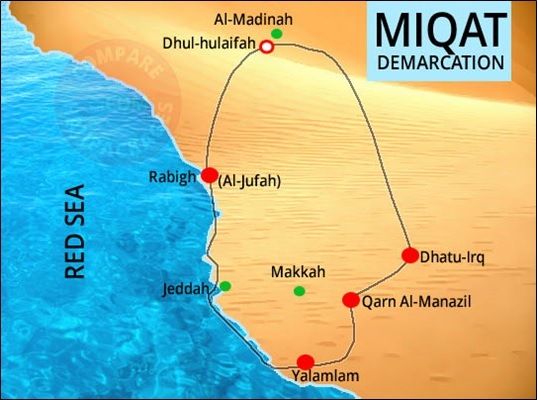
Jeddah: Inside the Miqat
- Scholarly consensus: Jeddah is inside the miqat.
- Those flying into Jeddah must be in ihram before descending into Jeddah.
- Practically:
- Assume ihram and make niyyah. 10–15 minutes before landing.
- Usually announced on flights.
Salah on Flights
- Estimate prayer times by sun position.
- Recommended to pray Maghrib & Isha together if boarding before sunset, Fajr on plane before landing, etc.
- Helpful apps exist to check timing during flights.
Madinah: Dhu al-Hulayfah
- Madinah has its own Haram, 21 km in diameter around the masjid.
- There is no need to be in ihram before the flight lands in Madinah.
- Dhu al-Hulayfah: Located about 20 minutes outside Madinah.
- The farthest miqat from Makkah.
- Stopping is not required; the key is being in ihram before crossing.
- Pilgrims typically stop, put on ihram, and pray two rakah.
Two Rakahs of Miqat
- Linked to the blessed valley of Dhu al-Hulayfah specifically, not to ihram in general.
- Prophet ﷺ prayed there because Jibril instructed him about that place.
- It is sunnah to pray two rakaah at any miqat. It is particular only to Dhu al-Hulayfah.
Makkah: The Hil and the Haram
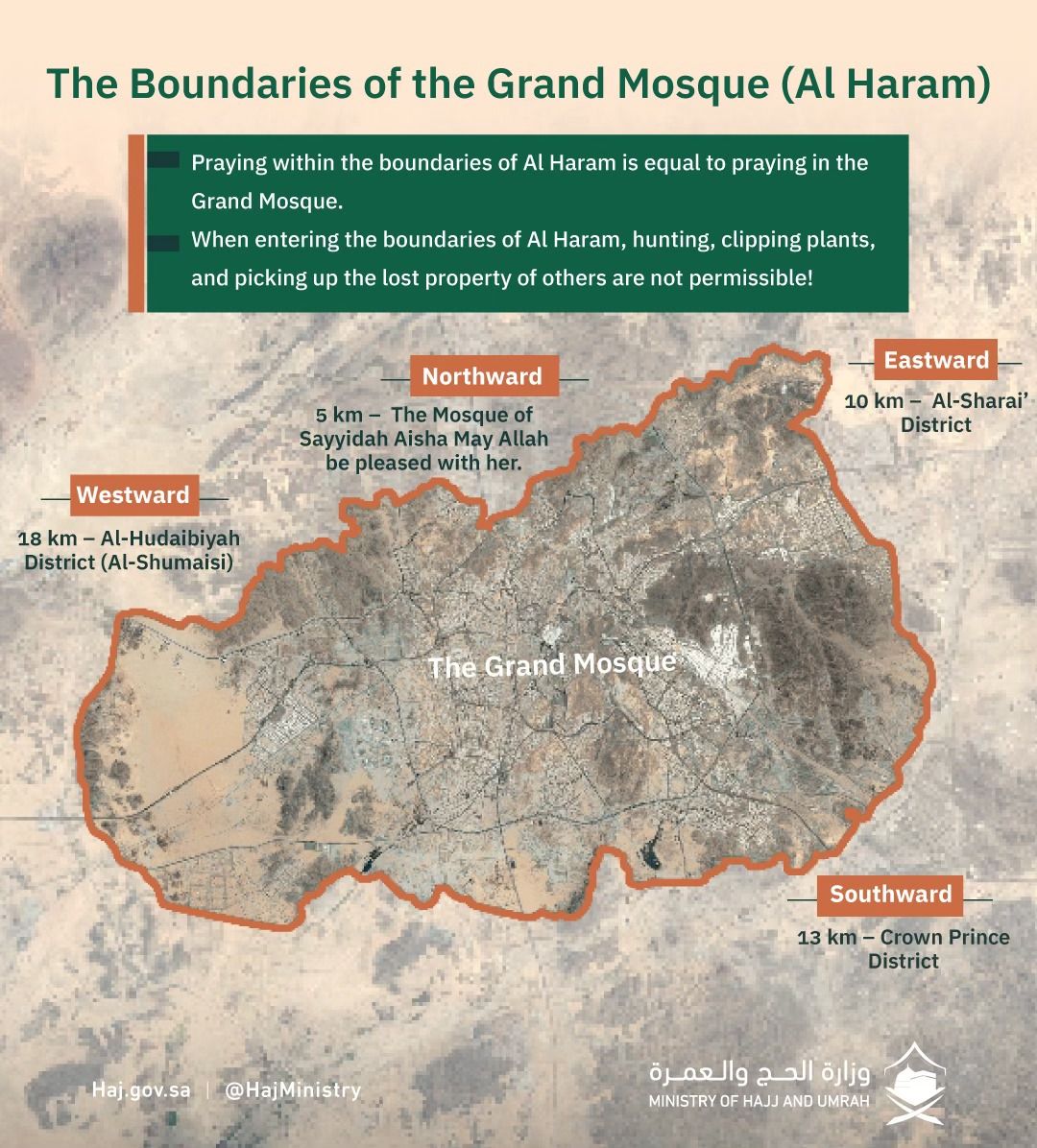
- Makkah has two sacred boundaries:
- Haram al-Makki: the innermost sacred area (no hunting, cutting trees, carrying weapons, etc.).
- Hil: outer boundary for pilgrims coming from outside.
- Those inside Makkah who want to perform another Umrah:
- Exit the Haram boundary into the Hil area (area between Haram and Miqat), assume ihram, and return.
- Not needed to go back to the full miqat.
- Referece the Hadith of the mawaqit.
Tanim: the Closest Hil
- Tanim is the nearest Hil location to the north of Masjid al-Haram, about 5 km no (10 minutes by car).
- Masjid Aishah or Masjid al-Tanim:
- During the Farewell Hajj, Aishah ᴿᴬ requested to perform Umrah.
- Prophet ﷺ instructed her brother, Abd al-Rahman, to take her to Tanim.
- She assumed ihram there, performed Umrah, and rejoined the Prophet ﷺ.
- Common place for Makkah residents/pilgrims to renew ihram.
- Serves visitors year-round for ihram and prayer.
Miqat in Summary
Miqat in Summary
- Maqwaqit are the appointed boundary points set by the Prophet ﷺ for entering the state of Ihram for Hajj or Umrah.
- The four primary Mawaqit are Dhu al-Hulayfah (for Madinah), al-Juhfah (for Sham), Qarn al-Manazil (for Najd), Yalamlam (for Yemen) and Dhat Irq for Iraq.
- Jeddah lies inside the miqat, so air travelers must enter Ihram before landing.
- Dhu al-Hulayfah for Madinah is the farthest miqat and it is Sunnah to pray two rakahs before assuming Ihram there.
- Makkah two zones: The Haram (inner sanctum) and The Hil (outer area). Those already in Makkah performing another Umrah must exit to the Hil to renew Ihram before returning for Umrah.
Haram al-Makki: The Inner Sanctum
Allah swears by the secure town
﴿وَالتِّينِ وَالزَّيْتُونِ وَطُورِ سِينِينَ وَهَٰذَا الْبَلَدِ الْأَمِينِ ﴾ (سُورَةُ التـِّين ٩٥:١)
95:1 By the fig and the olive 2 And ˹by˺ Mount Sinai 3 And ˹by˺ this secure city ˹Makkah˺,
Several mentions of Masjid al-Haram in the Quran
﴿أَجَعَلْتُمْ سِقَايَةَ الْحَاجِّ وَعِمَارَةَ الْمَسْجِدِ الْحَرَامِ كَمَنْ آمَنَ بِاللَّهِ وَالْيَوْمِ الْآخِرِ وَجَاهَدَ فِي سَبِيلِ اللَّهِ ۚ لَا يَسْتَوُونَ عِنْدَ اللَّهِ ۗ وَاللَّهُ لَا يَهْدِي الْقَوْمَ الظَّالِمِينَ ﴾ (سُورَةُ التوبَة ٩:١٩)
9:19 Have you made the providing of water for the pilgrim and the maintenance of al-Masjid al-Haram equal to ˹the deeds of˺ one who believes in Allah and the Last Day and strives in the cause of Allah? They are not equal in the sight of Allah. And Allah does not guide the wrongdoing people.
Other names of the Haram
-
Masjid al-Haram: The Sanctified Place of Worship
-
al-Balad: The town
-
al-Balad al-Haram: The Sanctified Town
-
al-Balad al-Amin: The Secure Town
-
Umm al-Qura: The Primary Town
-
al-Mamun: The town made secure
-
Makkah / Bakkah
-
etc.
-
Ibn al-Qayyyim said: Masjid al-Haram in the Quran refers to three things:
- The Kaabah
- The masjid around the Kaabah
- All of the Haram
Sanctity of the Haram
Allah made the Haram a safe sanctuary
﴿أَوَلَمْ يَرَوْا أَنَّا جَعَلْنَا حَرَمًا آمِنًا وَيُتَخَطَّفُ النَّاسُ مِنْ حَوْلِهِمْ ۚ أَفَبِالْبَاطِلِ يُؤْمِنُونَ وَبِنِعْمَةِ اللَّهِ يَكْفُرُونَ ﴾ (سُورَةُ العَنكبوت ٢٩:٦٧)
29:67 Have they not seen that We made ˹Makkah˺ a safe sanctuary, while people are being taken away all around them? Then in falsehood do they believe, and in the favor of Allah they disbelieve?
No wrongdoing in the Haram
﴿… وَالْمَسْجِدِ الْحَرَامِ الَّذِي جَعَلْنَاهُ لِلنَّاسِ سَوَاءً الْعَاكِفُ فِيهِ وَالْبَادِ ۚ وَمَنْ يُرِدْ فِيهِ بِإِلْحَادٍ بِظُلْمٍ نُذِقْهُ مِنْ عَذَابٍ أَلِيمٍ ﴾ (سُورَةُ الحَج ٢٢:٢٥)
22:25 … al-Masjid al-Haram, which We made for the people, equal are the resident therein and one from outside; and ˹also˺ whoever intends ˹a deed˺ therein of deviation ˹in religion˺ or wrongdoing - We will make him taste of a painful punishment.
Things forbidden in the Haram
- Fighting, killing, or bloodshed
- Cutting plants or trees
- Hunting animals or birds
- Keeping lost items without announcing them
- Carrying weapons for hostility
- Any form of sin or disrespect
Hadith: Sanctity of the Haram
«… فَإِنَّ هَذَا بَلَدٌ حَرَّمَ اللَّهُ يَوْمَ خَلَقَ السَّمَوَاتِ وَالأَرْضَ، وَهُوَ حَرَامٌ بِحُرْمَةِ اللَّهِ إِلَى يَوْمِ الْقِيَامَةِ۔ (١) وَإِنَّهُ لَمْ يَحِلَّ الْقِتَالُ فِيهِ لأَحَدٍ قَبْلِي، وَلَمْ يَحِلَّ لِي إِلاَّ سَاعَةً مِنْ نَهَارٍ فَهُوَ حَرَامٌ بِحُرْمَةِ اللَّهِ إِلَى يَوْمِ الْقِيَامَةِ، (٣) لاَ يُعْضَدُ شَوْكُهُ، (٤) وَلاَ يُنَفَّرُ صَيْدُهُ، (٥) وَلاَ يَلْتَقِطُ لُقَطَتَهُ إِلاَّ مَنْ عَرَّفَهَا، (٦) وَلاَ يُخْتَلَى خَلاَهَا … (٧) إِلاَّ الإِذْخِرَ» (البخاري ١٨٣٤ متفق عليه)
the Prophet ﷺ said: … No doubt, Allah has made this place (Mecca) a sanctuary since the creation of the heavens and the earth and will remain a sanctuary till the Day of Resurrection as Allah has ordained its sanctity.
- Fighting was not permissible in it for anyone before me, and even for me it was allowed only for a portion of a day. So, it is a sanctuary with Allah's sanctity till the Day of Resurrection.
- Its thorns should not be uprooted and
- its game should not be chased; and
- its lost items should not be picked up except by one who would announce that publicly, and
- its vegetation should not be cut. … except lemongrass.
Virtues of the Haram
Hadith: Salāh is 100,000 times better than elsewhere
«صَلاَةٌ فِي مَسْجِدِي أَفْضَلُ مِنْ أَلْفِ صَلاَةٍ فِيمَا سِوَاهُ إِلاَّ الْمَسْجِدَ الْحَرَامَ، وَصَلاَةٌ فِي الْمَسْجِدِ الْحَرَامِ أَفْضَلُ مِنْ مِائَةِ أَلْفِ صَلاَةٍ فِيمَا سِوَاهُ» (ابن ماجة ١٤٠٦ صحيح)
that the Messenger of Allah ﷺ said, “One prayer in my mosque is better than one thousand prayers elsewhere, except the Sacred Mosque: and one prayer in the Sacred Mosque is better than one hundred thousand prayers elsewhere.”
- Ibn al-Qayyim said: “A single act of obedience in the Haram is better than anywhere else, just as a single sin there is more severe than elsewhere.”
Haram al-Makki in Summary
Haram al-Makki in Summary
- The term encompasses the Kaabah, the surrounding mosque.
- The entire sanctified zone is made a protected sanctuary since the creation of the heavens and earth.
- Acts of worship within it carry immense reward, righteous deeds there are magnified, and sins committed within its bounds are more severe.
- It is a sacred space where fighting, hunting, cutting plants, and wrongdoing are forbidden. Its sanctity is everlasting, and even intending harm within it incurs divine punishment (22:25). The Prophet ﷺ confirmed that its holiness remains until the Day of Judgment.
Ihram
-
Common usage: the two white garments men wear.
-
Actual definition: the niyyah (intention) to perform Hajj or Umrah, expressed verbally.
-
Once this intention is made, one enters the state of ihram, regardless of clothing.
-
Wearing the garments is a sunnah preparation, not the ihram itself.
-
لَبَّيْكَ اللَّهُمَّ عُمْرَةً
O Allah, I respond to You for Umrah
Ihram Garments
-
For men:
- Two unsticthed white garmernts: rida (upper body) and izar (lower body)
- Unstitched means that the garment is not stiched for a limb or body part like a shirt with sleeves for arms, or pant legs. The garment itself can have stitching on it for the seams etc.
- Head and face must be uncovered
- No gloves
-
For women:
- Wear regular clothing
- Must have the hijab
- Must wear socks
- Face must be uncovered, i.e. no niqab
- No gloves
Sunnahs of Ihram
- Ghusl for cleanliness. Even for women in menses or postpartum bleeding
- Perfuming the body and not the garments
- Personal grooming: trimming nails, shaving pubic hair, etc.
- Praying two rakahs after wearing the garments avoiding prohibited times
Major violations of the Ihram
- Intercourse during ihram invalidates Hajj or Umrah
- There is no fidyah to compensate for this violation
Minor violations of the Ihram
- Wearing stitched clothing (for men)
- Using perfume
- Allowed: soaps, lotions, creams, toothpaste, even if slightly scented, since not used as perfume.
- Removing hair
- Trimming nails
- Covering a man’s head
- Hunting
- Contracting a marriage
- Sexual intercourse
- Physical intimacy short of intercourse
Fidyah for minor violation the state of Ihram
- For all minor violations, fidyah is either one of the following:
- Sacrifice of 1 goat/sheep (dam)
- Feeding 6 needy persons
- Fasting 3 days
- All 3 are equal choices; the pilgrim may select whichever is easiest.
- Accidental violations (e.g., hair falls when scratching) are excused without having to do the fidyah (compensation).
Talbiyah
Hadith: Talbiyah of the Prophet ﷺ
«لَبَّيْكَ اللَّهُمَّ لَبَّيْكَ، لَبَّيْكَ لاَ شَرِيكَ لَكَ لَبَّيْكَ، إِنَّ الْحَمْدَ وَالنِّعْمَةَ لَكَ وَالْمُلْكَ، لاَ شَرِيكَ لَكَ» (البخاري ١٥٤٩ متفق عليه)
The Talbiya of Messenger of Allah ﷺ was : labbayka Allāhumma labbayka, labbayka lā sharīka laka labbayka, inna al-ḥamda wa-al-niʿmata laka wa-al-mulk, lā sharīka laka
I respond to Your call O Allah, I respond to Your call, and I am obedient to Your orders, You have no partner, I respond to Your call. All the praises and blessings are for You, all the sovereignty is for You, and You have no partners with you.
- Sunnah to say the talbiyah loudly and frequently after entering ihram.
- Talbiyah applies to both Hajj and Umrah since it is tied to ihram, not just Hajj.
- Jibril commanded the Prophet ﷺ to instruct the Ummah to raise their voices with talbiyah.
- Everything that hears the talbiyah (trees, rocks, animals) will intercede for the pilgrim on the Day of Judgment.
Stopping the Talbiyah
- Upon entering the Masjid al-Haram
- Some say when seeing the Haram boundary.
- Some say when seeing the minarets.
- Some say when seeing the Kaabah.
- After stopping: switch to making dua
- Optional: some sahabah made special dua when first seeing the Kaabah
Ihram in Summary
Ihram in Summary
- True ihram is the intention to perform Hajj or Umrah, not the white garments themselves.
- Once the intention is made, ones enters a sacred state with specific restrictions: involving grooming, avoiding intimacy, and sinful acts
- Intercourse is a major violation and invalidates Hajj and Umrah
- In this state, the Talbiyah is recited out loud and often until arrival inside the Haram as the pilgrim’s full response to Allah’s call.
Arrival
Upon arrival
- No need to begin tawaf immediately after arriving.
- Pilgrims may:
- Check into hotel
- Rest and refresh
- Take a shower
- Change ihram garments if needed
Entering the Haram
Hadith: Dua when seeing the Kaabah
-
Some Sahabah stopped and made dua when first seeing the Kaabah.
-
No authentically established dua from the Prophet ﷺ specifically for this moment.
-
Recommended: one may make dua at this time.
-
Etiquette: if crowded, avoid blocking others; if empty, may pause longer.
-
«اللهُمَّ أَنْتَ السَّلَامُ وَمِنْكَ السَّلَامُ فَحَيِّنَا رَبَّنَا بِالسَّلَامِ،
اللهُمَّ زِدْ هَذَا الْبَيْتَ تَشْرِيفًا وَتَعْظِيمًا وَمَهَابَةً
وَزِدْ مَنْ حَجَّهُ أَوِ اعْتَمَرَهُ تَكْرِيمًا وَتَشْرِيفًا وَتَعْظِيمًا وَبِرًّا» (البيهقي ٩٢١٣)
… When the Prophet ﷺ entered Makkah and saw the Kaabah, he raised his hands, said Takbir (Allahu Akbar), and then said: O Allah, You are Peace, and from You comes peace. Grant us life with peace, O our Lord. O Allah, increase the honor, magnification, dignity, and grandeur of this house, and increase the honor, magnification, and dignity of those who perform Hajj or Umrah, and bestow upon them honor, magnification, dignity, and piety.
Tawaf
Perform the Tawaf of the House
﴿… وَلْيَطَّوَّفُوا بِالْبَيْتِ الْعَتِيقِ ذَٰلِكَ وَمَنْ يُعَظِّمْ حُرُمَاتِ اللَّهِ فَهُوَ خَيْرٌ لَهُ عِنْدَ رَبِّهِ…﴾ (سُورَةُ الحَج ٢٢:٢٩)
22:29 Then let them … perform Tawaf around the ancient House that ˹has been commanded˺, and whoever honors the sacred ordinances of Allah - it is best for him in the sight of his Lord…
Hadith: Tawaf is like Salah
«الطَّوَافُ حَوْلَ الْبَيْتِ مِثْلُ الصَّلاَةِ إِلاَّ أَنَّكُمْ تَتَكَلَّمُونَ فِيهِ فَمَنْ تَكَلَّمَ فِيهِ فَلاَ يَتَكَلَّمَنَّ إِلاَّ بِخَيْرٍ» (الترمذي ٩٦٠ حسن)
"Tawaf around the House is similar to Salat except that you talk during it. So whoever talks in it, then let him not say but good."
Hadith: Virtues of performing the Tawaf
«مَنْ طَافَ بِهَذَا الْبَيْتِ أُسْبُوعًا فَأَحْصَاهُ كَانَ كَعِتْقِ رَقَبَةٍ
لاَ يَضَعُ قَدَمًا وَلاَ يَرْفَعُ أُخْرَى إِلاَّ حَطَّ اللَّهُ عَنْهُ بِهَا خَطِيئَةً وَكَتَبَ لَهُ بِهَا حَسَنَةً» (الترمذي ٩٥٩ حسن)
"Whoever performs Tawaf around this House seven times and he keeps track of it, then it is as if he freed a slave." And I heard him saying: "One foot is not put down, nor another raised except that Allah removes a sin from him and records a good merit for him."
Wudu for Tawaf
- Opinions:
- Wudu is a pre-condition (Shafii, Maliki, Hanbali)
- Wudu is wajib; if missed, make up with fidya (Hanafi)
- Wudu is sunnah, not required (Ibn Taymiyyah)
- Best to have wudu before tawaf to avoid dispute.
- Minor cuts do not affect wudu or tawaf.
- If wudu breaks mid-tawaf:
- Majority: renew wudu and restart tawaf from the beginning.
- Ibn Taymiyyah and many later scholars: continue; tawaf still valid.
- No wudu is required for Sa'i by consensus.
Starting the Tawaf
- Begin and end each circuit at the Hajar al-Aswad.
- A green light marks the line; exactness to the inch is not required.
- If you cannot reach Hajar al-Aswad, simply point and say “Allahu Akbar” and keep moving.
- Use the right hand when gesturing.
- Do not stop or face the stone like in salah; say the takbir while walking.
- Begin every circuit with a single “Allahu Akbar.” Do not stop traffic.
Bearing the arms and brisk walking
Hadith: Jabir on the ramal during the Tawaf
-
«... حَتَّى إِذَا أَتَيْنَا الْبَيْتَ مَعَهُ اسْتَلَمَ الرُّكْنَ فَرَمَلَ ثَلاَثًا وَمَشَى أَرْبَعًا…» (مسلم ١٢١٨a صحيح) -
Ramal is walking briskly with short steps during the first three circuits.
-
Idtiba means keeping the right shoulder uncovered maintained throughout all seven rounds.
-
Both are acts of Sunnah specific only to men, done only in a Tawaf followed by Sai.
-
Both Ramal and Idtiba are excused if left out due to crowding, weakness, or modesty reasons, and the pilgrim is still rewarded for the intention.
Respecting others
Hadith: Be warned: the honor of a believer is greater than the honor of the Kaabah
«مَا أَطْيَبَكِ، وَأَطْيَبَ رِيحَكِ، مَا أَعْظَمَكِ، وَأَعْظَمَ حُرْمَتَكِ، وَالَّذِي نَفْسُ مُحَمَّدٍ بِيَدِهِ لَحُرْمَةُ الْمُؤْمِنِ أَعْظَمُ عِنْدَ اللَّهِ حُرْمَةً مِنْكِ مَالِهِ وَدَمِهِ وَأَنْ نَظُنَّ بِهِ إِلاَّ خَيْرًا» (ابن ماجة ٣٩٣٢ صحيح)
How pure you are, and how sweet is your fragrance; how great you are, and how great your sanctity. By the One in Whose Hand is the soul of Muhammad, the sanctity of the believer is greater before Allah than your sanctity, his blood and his wealth, and to think anything but good of him.
Dhikr during Tawaf
- No fixed prophetic adhkar for most of the tawaf.
- Between Rukn al-Yamani and the Black Stone, recite the known dua.
- Prefer Quran, tasbih, and personal dua you understand over pamphlets you do not.
Dua between Rukn al-Yamani and Hajar al-Aswad
﴿… رَبَّنَا آتِنَا فِي الدُّنْيَا حَسَنَةً وَفِي الْآخِرَةِ حَسَنَةً وَقِنَا عَذَابَ النَّارِ ﴾ (سُورَةُ البَقَرَة ٢:٢٠١)
2:201 But among them is he who says, "Our Lord, give us in this world ˹that which is˺ good and in the Hereafter ˹that which is˺ good and protect us from the punishment of the Fire."
Counting the Tawaf circuits
- Crowds cause confusion; use a simple method to track laps (finger positions, tasbih, clicker).
- If unsure between two numbers, act on certainty and take the lower number, then continue.
Breaks during Tawaf
- Short, necessary breaks are fine; resume from where you paused.
- Long, unnecessary breaks require restarting from the beginning.
- Examples of valid short breaks include a mother briefly nursing her infant.
Ending the Tawaf
- The seventh circuit completes at the Black Stone,
- Do not gesture or say an additional takbir at the Black Stone; that would make eight.
- Seal the tawaf by praying two rakahs away from the flow of people.
Tawaf in Summary
Tawaf in Summary
- It is the act of circling the Kaabah seven times in worship, beginning and ending at the Black Stone.
- It mirrors Salah in sanctity, requiring focus, respect, and remembrance of Allah.
- As honorable as the Kaabah is, the Prophet ﷺ taught that a believer’s honor and life are even more sacred than the Kaabah itself.
- Each step wipes away sins and earns reward.
- Begin each round with “Allahu Akbar,” maintain wudu if possible, and engage in dhikr, Quran, or personal dua rather than fixed phrases.
- After the seventh circuit, pray two rakahs in a clear spot away from the crowd to conclude the Tawaf with gratitude and closeness to Allah.
Corners of the Kaabah
There are two special corners of the Kaabah and it is Sunnah and virtuous to touch them:
- Hajar al-Aswad: The Black Stone
- Rukn al-Yamani: The Yemeni Corner
Hadith: Touching the two Rukns
«أَنَّ ابْنَ عُمَرَ كَانَ يُزَاحِمُ عَلَى الرُّكْنَيْنِ زِحَامًا مَا رَأَيْتُ أَحَدًا مِنْ أَصْحَابِ النَّبِيِّ ﷺ يَفْعَلُهُ فَقُلْتُ يَا أَبَا عَبْدِ الرَّحْمَنِ إِنَّكَ تُزَاحِمُ عَلَى الرُّكْنَيْنِ زِحَامًا مَا رَأَيْتُ أَحَدًا مِنْ أَصْحَابِ النَّبِيِّ ﷺ يُزَاحِمُ عَلَيْهِ فَقَالَ إِنْ أَفْعَلْ فَإِنِّي سَمِعْتُ رَسُولَ اللَّهِ ﷺ يَقُولُ إِنَّ مَسْحَهُمَا كَفَّارَةٌ لِلْخَطَايَا» (الترمذي ٩٥٩ حسن)
Ibn Umar was clinging on the two corners… so I said: "O Abu Abd al-Rahman! You are clinging on the two corners in a manner that I have not seen any of the Companions of the Prophet clinging." So he said: "I do it because I heard the Messenger of Allah saying: 'Touching them expiates sins.'"
Hajar al-Aswad (The Black Stone)
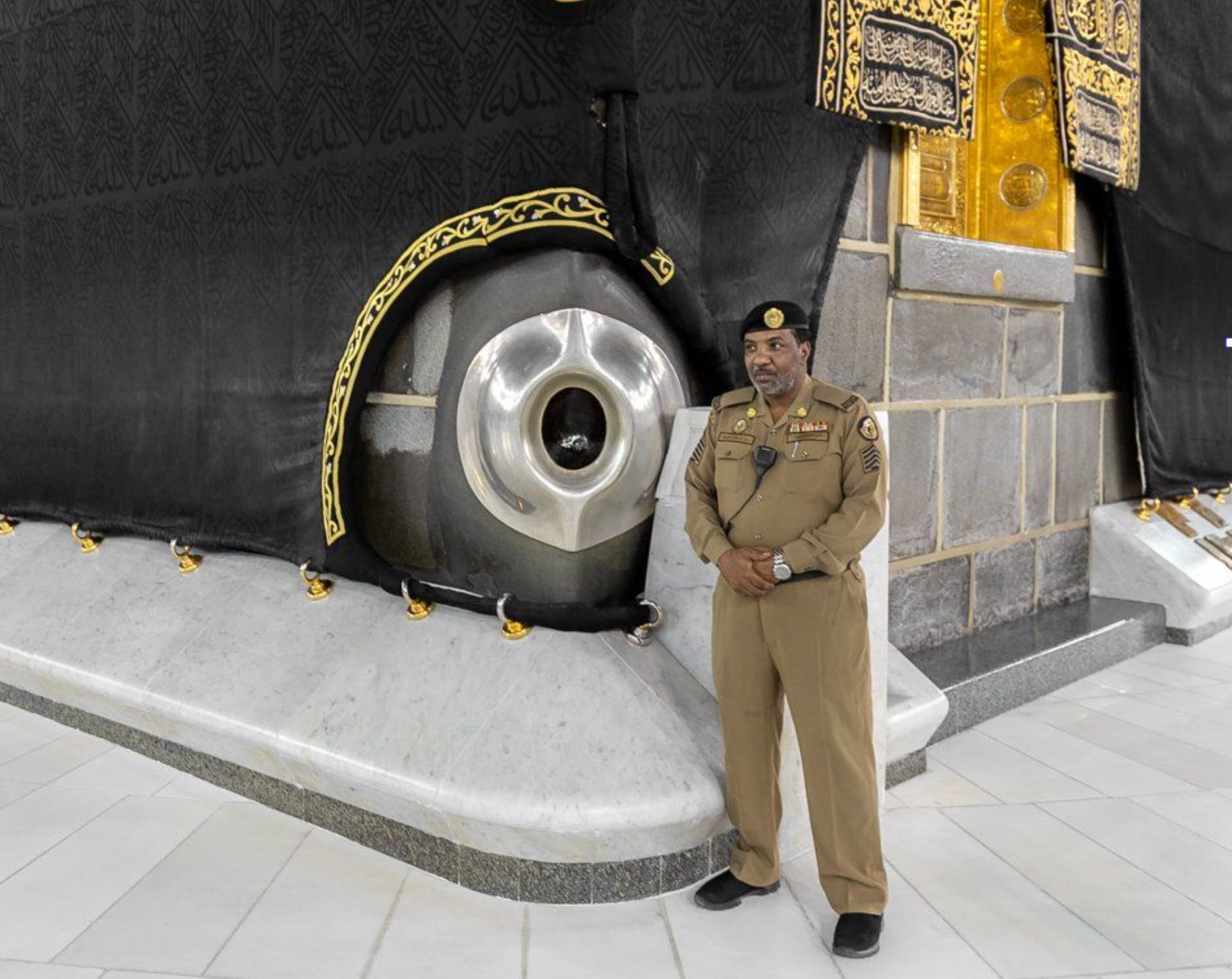
- The Black Stone is a stone from Jannah.
- It descended from Paradise whiter than milk, but the sins of humanity darkened it.
- The Black Stone and Maqam Ibrahim are both jewels from Jannah. Allah dimmed their light; otherwise, they would have illuminated everything between East and West.
- Touching the Black Stone and the Yemeni Corner wipes away sins.
- If the impurities of Jahiliyyah had not affected it, anyone who touched the Black Stone would be cured of illness.
- On the Day of Judgment, the Black Stone will come with eyes to see and a tongue to speak, and it will testify for those who touched it truthfully.
Hadith: The Prophet ﷺ kissed Hajar al-Aswad
«أَنَّهُ جَاءَ إِلَى الْحَجَرِ الأَسْوَدِ فَقَبَّلَهُ فَقَالَ: إِنِّي أَعْلَمُ أَنَّكَ حَجَرٌ لاَ تَضُرُّ وَلاَ تَنْفَعُ وَلَوْلاَ أَنِّي رَأَيْتُ النَّبِيَّ ﷺ يُقَبِّلُكَ مَا قَبَّلْتُكَ» (البخاري ١٥٩٧ متفق عليه)
ʿUmar came near the Black Stone and kissed it and said "No doubt, I know that you are a stone and can neither benefit anyone nor harm anyone. Had I not seen Messenger of Allah ﷺ kissing you I would not have kissed you."
- Sunnah hierarchy: (1) kiss or (2) touch by hand or (3) touch with a stick or (4) point to it.
- The stone is set in a silver frame with barely visible fragments of the original stone; if you kiss, aim for the black stone itself if safely possible.
Rukn al-Yamani (Yemeni Corner)
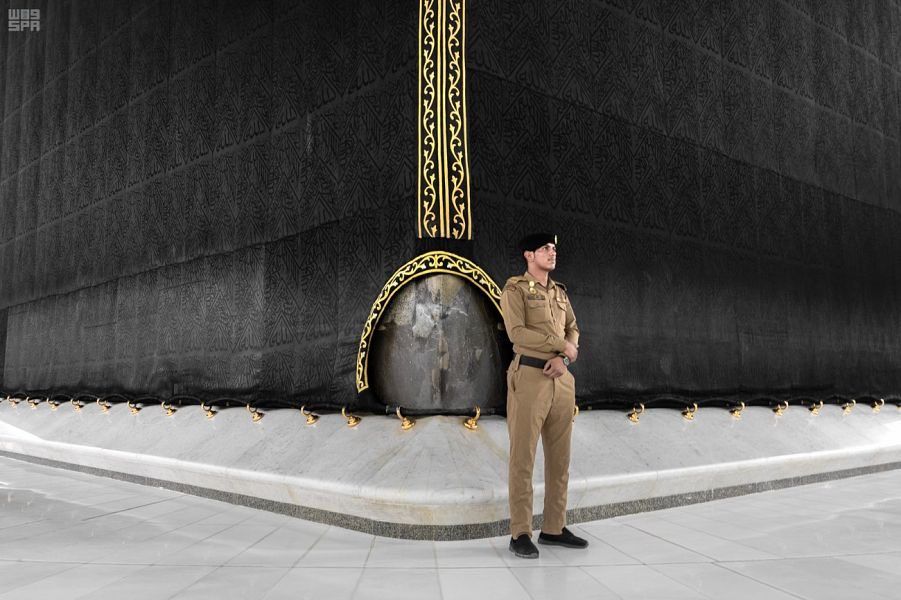
- According to Muhammad Tahir al-Kurdi, the current Yemeni Corner stone dates back to the reconstruction of the Kaabah by Abdullah b. al-Zubayr ᴿᴬ (73 AH).
- It has remained in place until today, preserved by those who rebuilt the Kaabah.
Touching Rukn al-Yamani
«إِنَّ مَسْحَهُمَا كَفَّارَةٌ لِلْخَطَايَا» (الترمذي ٩٥٩ حسن)
I heard the Messenger of Allah saying: "Touching them (including the Yemeni Corner) expiates sins."
- Sunnah to touch it with the right hand if reachable
- No pointing if you miss it.
- If crowded, pass without touching.
Multazam
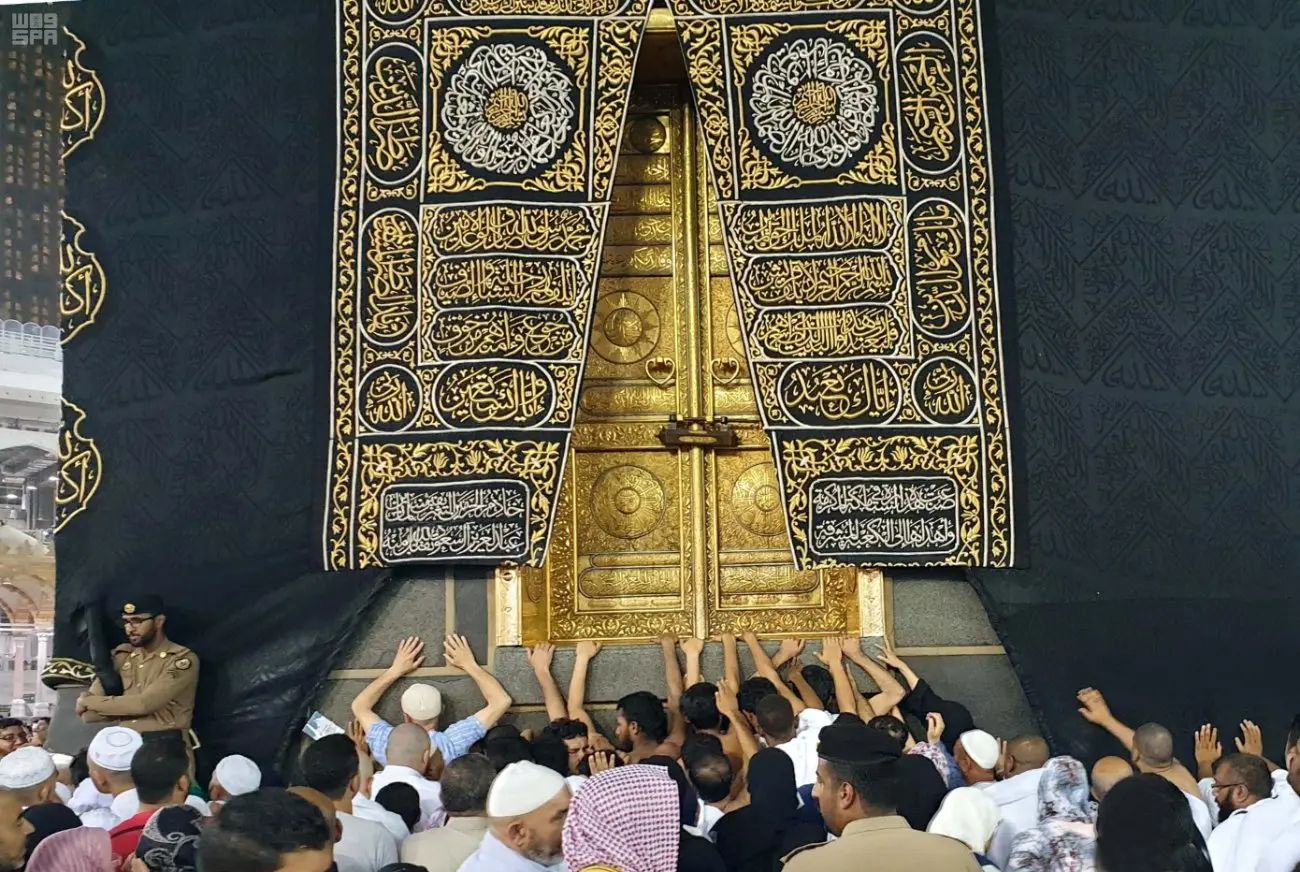
- Area between the Black Stone and the Kaabah door. Reported as a place of answered dua.
- The Prophet ﷺ stood there making lengthy dua.
- Try when safe
Hadith: The Prophet ﷺ at the Multazam
«طُفْتُ مَعَ عَبْدِ اللَّهِ فَلَمَّا جِئْنَا دُبَرَ الْكَعْبَةِ قُلْتُ أَلاَ تَتَعَوَّذُ قَالَ نَعُوذُ بِاللَّهِ مِنَ النَّارِ ثُمَّ مَضَى حَتَّى اسْتَلَمَ الْحَجَرَ وَأَقَامَ بَيْنَ الرُّكْنِ وَالْبَابِ فَوَضَعَ صَدْرَهُ وَوَجْهَهُ وَذِرَاعَيْهِ وَكَفَّيْهِ هَكَذَا وَبَسَطَهُمَا بَسْطًا ثُمَّ قَالَ هَكَذَا رَأَيْتُ رَسُولَ اللَّهِ ﷺ يَفْعَلُهُ» (أبو داود ١٨٩٩ ضعيف)
I went round the Kaabah along with Abdullah b. Amr. When we came behind the Kaabah I asked: Do you not seek refuge? He uttered the words: I seek refuge in Allah from the Hellfire. He then went (farther) and touched the Black Stone, and stood between the corner (Black Stone) and the entrance of the Kaabah. He then placed his breast, his face, his hands and his palms in this manner, and he spread them, and said: I saw the Messenger of Allah ﷺ doing like this.
Hatim
- Semi-circular wall adjacent to the Kaabah.
- The original cubical structure of the Kaabah until the time of the Quraysh included the area of the Hatim
- When Quraysh rebuilt the Kaabah after it was damaged in a flood, they lacked sufficient lawful funds to build it fully.
- They reduced the Kaabah’s dimensions, leaving a portion outside the structure.
- Hatim means wrecked or broken off
- Prayer inside the Hatim
- It is like praying inside the Kaabah
- Prayer can be done facing any direction
- However, it is usually done facing the Kaabah structure to avoid awkwardness
Hadith: The Prophet ﷺ desire to rebuild the Kaabah on its original foundations
«أَنَّ النَّبِيَّ ﷺ قَالَ لَهَا يَا عَائِشَةُ لَوْلاَ أَنَّ قَوْمَكِ حَدِيثُ عَهْدٍ بِجَاهِلِيَّةٍ لأَمَرْتُ بِالْبَيْتِ فَهُدِمَ فَأَدْخَلْتُ فِيهِ مَا أُخْرِجَ مِنْهُ وَأَلْزَقْتُهُ بِالأَرْضِ وَجَعَلْتُ لَهُ بَابَيْنِ بَابًا شَرْقِيًّا وَبَابًا غَرْبِيًّا فَبَلَغْتُ بِهِ أَسَاسَ إِبْرَاهِيمَ» (البخاري ١٥٨٦ صحيح)
"O Aishah! Were your nation not close to the Pre-Islamic Period of Ignorance, I would have had the Kaabah demolished and would have included in it the portion which had been left, and would have made it at a level with the ground and would have made two doors for it, one towards the east and the other towards the west, and then by doing this it would have been built on the foundations laid by Abraham."
Tragic history of the damage and rebuilding of the Kaabah
- 64 AH Siege by Hajjaj b. Yusuf: The Kaabah was damaged by catapult fire during the Umayyad siege against Abdullah b. Zubayr causing its walls to collapse and parts to burn.
- 65 AH / 684 CE Rebuilding by Ibn al-Zubayr: He rebuilt the Kaabah on the original foundations of Ibrahim ᴬˢ, included the Hatim inside, and added two ground-level doors (east and west), following the hadith of Aishah ᴿᴬ.
- 73 AH / 692 CE Demolition and Reconstruction by Hajjaj: Acting under Caliph Abd al-Malik, Hajjaj demolished and rebuilt the Kaabah back to the Qurayshi design, removing the Hatim and closing the western door.
- Imam Malik advised against frequent alterations, so the Kaabah remained in its current Qurayshi form, the same as during the Prophet ﷺ’s time.
Corners of the Kaabah in Summary
Corners of the Kaabah in Summary
- It is Sunnah to touch the Black Stone and the Yemeni Corner during Tawaf, as doing so expiates sins.
- The Black Stone is a stone from Jannah, originally radiant and pure but darkened by human sins. Touching or kissing it wipes away sins, but pilgrims should avoid pushing or harm. Pointing at it from afar suffices.
- The Multazam is where the Prophet ﷺ made heartfelt dua and is a blessed spot where supplications are likely accepted.
- The Hatim (is the semi-circular area adjacent to the Kaabah, originally part of it built on the foundations of Ibrahim ᴬˢ; the Quraysh excluded it during reconstruction due to limited funds
Maqam Ibrahim
-
The stone on which Prophet Ibrahim ᴬˢ stood while building the Ka‘bah.
-
Ibrahim ᴬˢ built the House with Ismail ᴬˢ bringing stones to him. When the walls rose higher, Ibrahim stood on this stone while Ismail ᴬˢ passed stones to him. Both made a dua:
-
﴿وَإِذْ يَرْفَعُ إِبْرَاهِيمُ الْقَوَاعِدَ مِنَ الْبَيْتِ وَإِسْمَاعِيلُ رَبَّنَا تَقَبَّلْ مِنَّا ۖ إِنَّكَ أَنْتَ السَّمِيعُ الْعَلِيمُ ﴾ (سُورَةُ البَقَرَة ٢:١٢٧)
2:127 And ˹mention˺ when Abraham was raising the foundations of the House and ˹with him˺ Ishmael, ˹saying˺, "Our Lord, accept ˹this˺ from us. Indeed You are the Hearing, the Knowing.
- Authentic reports confirm that Umar b. al-Khattab ᴿᴬ was the one who moved the Maqam from its original position to make more room for the mataf.
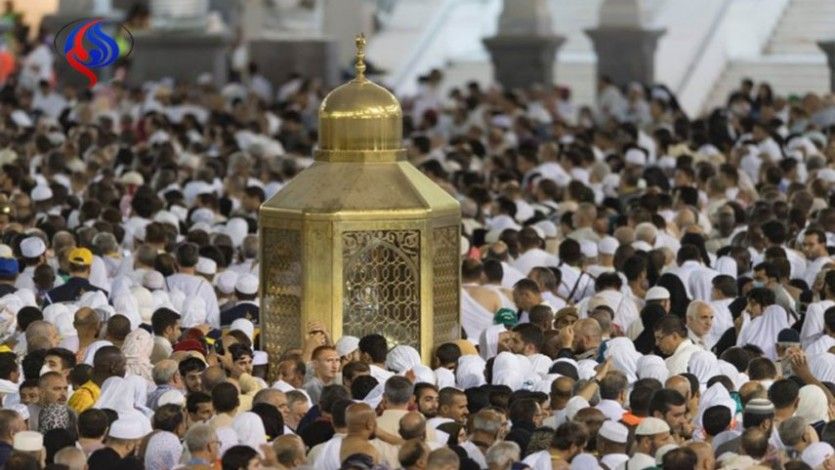
Praying two rakahs at the Maqam
Command to pray at Maqam Ibrahim
﴿وَإِذْ جَعَلْنَا الْبَيْتَ مَثَابَةً لِلنَّاسِ وَأَمْنًا وَاتَّخِذُوا مِنْ مَقَامِ إِبْرَاهِيمَ مُصَلًّى… ﴾ (سُورَةُ البَقَرَة ٢:١٢٥)
2:125 And ˹mention˺ when We made the House a place of return for the people and ˹a place of˺ security. And take, ˹O believers˺, from the standing place of Ibrahim a place of prayer…
Hadith: Jabir on the two rakahs of the Prophet ﷺ
«… ثُمَّ نَفَذَ إِلَى مَقَامِ إِبْرَاهِيمَ عَلَيْهِ السَّلاَمُ فَقَرَأَ {وَاتَّخِذُوا مِنْ مَقَامِ إِبْرَاهِيمَ مُصَلًّى} فَجَعَلَ الْمَقَامَ بَيْنَهُ وَبَيْنَ الْبَيْتِ فَكَانَ أَبِي يَقُولُ وَلاَ أَعْلَمُهُ ذَكَرَهُ إِلاَّ عَنِ النَّبِيِّ ﷺ كَانَ يَقْرَأُ فِي الرَّكْعَتَيْنِ {قُلْ هُوَ اللَّهُ أَحَدٌ} وَ {قُلْ يَا أَيُّهَا الْكَافِرُونَ} ثُمَّ رَجَعَ إِلَى الرُّكْنِ فَاسْتَلَمَهُ» (مسلم ١٢١٨a صحيح)
… and then going to the Station of Ibrahim, he recited:" And adopt the Station of Ibrahim as a place of prayer." And this Station was between him and the House. My father said (and I do not know whether he had made a mention of it but that was from Allah's Apostle ﷺ that he recited in two rakahs: ˹Surat al-Ikhlas˺ and ˹Surat al-Kafirun˺. He then returned to the corner (Hajar al-Aswad) and kissed it. He then went out of the gate to al-Safa…
- After Tawaf, it is Sunnah to pray two rakahs behind Maqam Ibrahim while reciting the ayah:
﴿وَاتَّخِذُوا مِنْ مَقَامِ إِبْرَاهِيمَ مُصَلًّى﴾ (سُورَةُ البَقَرَة ٢:١٢٥)
2:125 … And take, ˹O believers˺, from the standing place of Ibrahim a place of prayer
- And it is Sunnah to recite Surat al-Kafirun and Surat al-Ikhlas.
- If unable to pray near Maqam Ibrahim, pray anywhere in the Haram.
- Not praying these two rakahs means missing a Sunnah, but the umrah remains valid.
- Scholars caution against blocking Tawaf traffic by insisting on praying directly behind Maqam Ibrahim.
Praying the two rakahs during makruh times
- This is a classical difference of opinion
- Majority: Delay until after the makruh time passes.
- Minority and strong opinion: Permissible to pray immediately, especially in the Haram. No makruh times apply in Masjid al-Haram; the two rakahs may be prayed immediately after tawaf, regardless of the time.
Maqam in Summary
Maqam in Summary
- It is the stone where Prophet Ibrahim ᴬˢ stood while building the Kaabah.
- After the Tawaf, it is Sunnah to pray two rakahs behind Maqam Ibrahim or anywhere else in the Haram if crowded.
- Scholars permit praying these rakahs immediately after Tawaf even during makruh prayer times.
Zamzam
Virtues of Zamzam
- Considered the most blessed water on earth, continuing to miraculously flow for over 4,000 years despite millions drinking daily.
Hadith: The best water on earth
«خَيْرُ مَاءٍ عَلَى وَجْهِ الْأَرْضِ مَاءُ زَمْزَمَ، فِيهِ طَعَامٌ مِنَ الطُّعْمِ وَشِفَاءٌ مِنَ السُّقْمِ» (الطبراني ١١١٦٧
The Messenger of Allah ﷺ said: "The best water on the face of the earth is the water of Zamzam. It has food-like taste and is a cure for sickness."
Hadith: It is for what it is drunk for
«مَاءُ زَمْزَمَ لِمَا شُرِبَ لَهُ» (ابن ماجة ٣٠٦٢ حسن)
I heard the Messenger of Allah ﷺ say: "The water of Zamzam is for whatever it is drunk for."
Drinking Zamzam between Tawaf and Sa'i
- After tawaf, the Prophet ﷺ drank Zamzam before proceeding to Sa'i.
- Sunnah is to fill oneself with Zamzam, drink in small sips, and even pour it on oneself.
- It is also Sunnah to make wudu with Zamzam.
- Also permissible at any time, including during Tawaf or Sa'i.
- Especially sunnah to drink between Tawaf and Sa'i, as the Prophet ﷺ did.
- Zamzam taps and stations are placed near the mas'a (between Safa and Marwa)
- Beware of black market refills with regular water.
Zamzam in Summary
Zamzam in Summary
- It is a miraculous well from the time of Ismail ᴬˢ,
- It is described by the Prophet ﷺ as “the best water on earth” and a cure for illness.
- The Prophet ﷺ said, “Zamzam is for whatever it is drunk for,” highlighting its blessing for both spiritual and worldly needs.
- It is Sunnah to drink Zamzam after Tawaf, before Sa'i.
Sa'i
Performing Sa'i is a commandment
﴿إِنَّ الصَّفَا وَالْمَرْوَةَ مِنْ شَعَائِرِ اللَّهِ ۖ فَمَنْ حَجَّ الْبَيْتَ أَوِ اعْتَمَرَ فَلَا جُنَاحَ عَلَيْهِ أَنْ يَطَّوَّفَ بِهِمَا ۚ وَمَنْ تَطَوَّعَ خَيْرًا فَإِنَّ اللَّهَ شَاكِرٌ عَلِيمٌ ﴾ (سُورَةُ البَقَرَة ٢:١٥٨)
2:158 Indeed, al-Safa and al-Marwah are among the symbols of Allah. So whoever makes Hajj to the House or performs Umrah - there is no blame upon him for walking between them. And whoever volunteers good - then indeed, Allah is appreciative and Knowing.
- It commemorates Sunnah of the struggle of Lady Hajar
- Sa'i is done between mount Safa and mount Marwa
- Safa: Foothills of Jabal Abu Qubais
- Marwa: Foothills of Jabal Quayqian
- The mounts have shrunk in size due to foot traffic over the centuries
- Historically, the Mas'a (Sa'i area) was outside the Haram boundary. One had to exit the Haram to perform it until recent times.
Starting the Sa'i
- Wudu is not required for Sa‘i, unlike Tawaf.
- The Prophet ﷺ said: “I will begin with what Allah began with,” so Sa‘i starts at Safa.
- Climbing the mountain is unnecessary; standing at the marked base suffices.
- One faces the Kaabah if visible, makes dhikr, and long dua.
- Dua is made at both Safa and Marwah before beginning the walk.
Counting laps of the Sa'i
- Safa to Marwah = 1
- Marwah to Safa = 2
- Total 7, ending at Marwah.
- Each lap begins with takbir (thrice)
- Mistake: some count a round trip as one and do 14, which is incorrect.
Brisk walking in the valley
- Harwalah: Men should jog lightly between the green markers (imitating Hajar’s run to see Ismail).
- Women do not run, as modesty is emphasized for them.
Dhikr during Sa'i
Hadith: Dhikr of the Prophet ﷺ during the Sa'i
«… ثُمَّ خَرَجَ مِنَ الْبَابِ إِلَى الصَّفَا فَلَمَّا دَنَا مِنَ الصَّفَا قَرَأَ:
{إِنَّ الصَّفَا وَالْمَرْوَةَ مِنْ شَعَائِرِ اللَّهِ} (أَبْدَأُ بِمَا بَدَأَ اللَّهُ بِهِ)
فَبَدَأَ بِالصَّفَا فَرَقِيَ عَلَيْهِ حَتَّى رَأَى الْبَيْتَ فَاسْتَقْبَلَ الْقِبْلَةَ فَوَحَّدَ اللَّهَ وَكَبَّرَهُ وَقَالَ:
(لاَ إِلَهَ إِلاَّ اللَّهُ وَحْدَهُ لاَ شَرِيكَ لَهُ لَهُ الْمُلْكُ وَلَهُ الْحَمْدُ، وَهُوَ عَلَى كَلِّ شَىْءٍ قَدِيرٌ، لاَ إِلَهَ إِلاَّ اللَّهُ وَحْدَهُ، أَنْجَزَ وَعْدَهُ وَنَصَرَ عَبْدَهُ وَهَزَمَ الأَحْزَابَ وَحْدَهُ)
ثُمَّ دَعَا بَيْنَ ذَلِكَ قَالَ مِثْلَ هَذَا ثَلاَثَ مَرَّاتٍ ثُمَّ نَزَلَ إِلَى الْمَرْوَةِ حَتَّى إِذَا انْصَبَّتْ قَدَمَاهُ فِي بَطْنِ الْوَادِي سَعَى حَتَّى إِذَا صَعِدَتَا مَشَى حَتَّى أَتَى الْمَرْوَةَ فَفَعَلَ عَلَى الْمَرْوَةِ كَمَا فَعَلَ عَلَى الصَّفَا» (مسلم ١٢١٨a صحيح)
… He then went out of the gate to al-Safa and as he reached near it he recited: "Safa and Marwa are among the signs appointed by Allah," adding I begin with what Allah (has commanded me) to begin." He first mounted al-Safa till he saw the House, and facing Qibla he declared the Oneness of Allah and glorified Him, and said:
"There is no god but Allah, One, there is no partner with Him. His is the Sovereignty. to Him praise is due. and He is Powerful over everything. There is no god but Allah alone, Who fulfilled His promise, helped His servant and routed the confederates alone." He then made supplication in the course of that saying such words three times.
He then descended and walked towards al-Marwa, and when his feet came down in the bottom of the valley, he ran, and when he began to ascend he walked till he reached al-Marwa. There he did as he had done at al-Safa.
- Sunnah dhikr includes:
- subhan Allah
- al-hamdu lillah
- Allahu Akbar
لاَ إِلَهَ إِلاَّ اللَّهُ وَحْدَهُ لاَ شَرِيكَ لَهُ لَهُ الْمُلْكُ وَلَهُ الْحَمْدُ، وَهُوَ عَلَى كَلِّ شَىْءٍ قَدِيرٌ، لاَ إِلَهَ إِلاَّ اللَّهُ وَحْدَهُ، أَنْجَزَ وَعْدَهُ وَنَصَرَ عَبْدَهُ وَهَزَمَ الأَحْزَابَ وَحْدَهُ
There is no god but Allah, One, there is no partner with Him. His is the Sovereignty. to Him praise is due. and He is Powerful over everything. There is no god but Allah alone, Who fulfilled His promise, helped His servant and routed the confederates alone.
- This dhikr and du‘a are sunnah, not obligatory.
- Whoever leaves them out, intentionally or forgetfully, his Sa‘i is still valid.
- Ibn Rushd stated: there is no fixed wording for Sa‘i; it is a place of dua.
Ending the Sa'i
- The seventh lap ends at Marwah.
- No special dua is prescribed at the end.
- Dua was made only at Safa and Marwah during the rounds.
Shaving or trimming after Sa'i
Hadith: Virtues of shaving and trimming hair
«دَعَا لِلْمُحَلِّقِينَ ثَلاَثًا وَلِلْمُقَصِّرِينَ مَرَّةً» (مسلم ١٣٠٣ صحيح)
the Messenger of Allah ﷺ made dua three times for those who got their heads shaved and once for those who got their hair clipped.
-
After completing Sa'i, the ritual concludes with shaving (halq) or trimming (taqsir) the hair.
-
Represents the sacrifice in a minor way as compared to the Hajj
-
Shaving for men is more virtuous though trimming is also accepted.
-
Shaving or trimming must be real and meaningful.
-
Merely clipping two or three hairs, as permitted by a minority view in one madhhab, is considered a weak. It contradicts the spirit of the shariah.
-
For women:
- Women are not permitted to shave.
- The sunnah is to trim only a fingertip’s length of hair from the ends by gathering the hair
Completion of the Umrah
- Once shaving or trimming is performed, the state of ihram ends completely,
- All restrictions are then lifted.
Sa'i in Summary
Sa'i in Summary
- This commandment is a reenactment of Lady Hajar’s devotion and struggle in search of water.
- Begins at Safa, ends at Marwah, completing seven laps with or without wudu.
- Dhikr and dua are recited at both Safa and Marwah.
- After the Sa'i, men shave or trim (taqsir) their hair, and women trim a fingertip’s length from their ends.
- Shaving or trimming marks the end of ihram and completes the Umrah, lifting all restrictions.
Acts after Umrah in Makkah
Itikaf in the Haram
The Quran speak about those who do itikaf
﴿…وَعَهِدْنَا إِلَىٰ إِبْرَاهِيمَ وَإِسْمَاعِيلَ أَنْ طَهِّرَا بَيْتِيَ لِلطَّائِفِينَ وَالْعَاكِفِينَ وَالرُّكَّعِ السُّجُودِ ﴾ (سُورَةُ البَقَرَة ٢:١٢٥)
2:125 … And We charged Abraham and Ishmael, ˹saying˺, "Purify My House for those who perform Tawaf and the akifin (those performing itikaf) and those who bow and prostrate ˹in prayer˺."
- In Masjid al-Haram, the person does not need to stay in a fixed spot.
- He may move anywhere inside the mosque.
- Some scholars recommend sitting at the back of the mosque to avoid distractions from people talking.
Hadith: Virtues of those who gather in the masajid for the remembrance of Allah
«مَا اجْتَمَعَ قَوْمٌ فِي بَيْتٍ مِنْ بُيُوتِ اللَّهِ تَعَالَى، يَتْلُونَ كِتَابَ اللَّهِ، وَيَتَدَارَسُونَهُ بَيْنَهُمْ، إِلاَّ نَزَلَتْ عَلَيْهِمُ السَّكِينَةُ، وَغَشِيَتْهُمُ الرَّحْمَةُ، وَحَفَّتْهُمُ الْمَلاَئِكَةُ، وَذَكَرَهُمُ اللَّهُ فِيمَنْ عِنْدَهُ۔» (أبو داود ١٤٥٥ صحيح)
No people get together in a house of the houses of Allah, reciting the Book of Allah, and learning it together among themselves, but sakīnah (tranquility) comes down upon them, Mercy envelops them, angels surround them, and Allah makes a mention of them among those who are with Him.
Method of Itikaf
- Can be done any time
- Intention in the heart for the sake of Allah is sufficient
- For women:
- Majority: Must be done in a masjid, any masjid
- Hanafi: Should be done at home, and disliked to be done in a masjid
- Duration of itikaf:
- Shafii: A moment is sufficient
- Hanafi + Hanbali: One hour minimum
- Maliki: One day
- Sunnah of itikaf
- It is a personal spiritual retreat
- Limit interaction with the outside world focusing on worship
- Limit unnecessary speech
- Limit speech to what brings one closer to Allah
- Sleeping in the Haram
- Better to maintain dignity and rest in proper accommodation, then return refreshed for worship.
- Prophet ﷺ sometimes slept in the Haram, but it is not prescribed as an act of worship.
Extra Tawafs
Hadith: Virtues of performing the Tawaf
«مَنْ طَافَ بِهَذَا الْبَيْتِ أُسْبُوعًا فَأَحْصَاهُ كَانَ كَعِتْقِ رَقَبَةٍ
لاَ يَضَعُ قَدَمًا وَلاَ يَرْفَعُ أُخْرَى إِلاَّ حَطَّ اللَّهُ عَنْهُ بِهَا خَطِيئَةً وَكَتَبَ لَهُ بِهَا حَسَنَةً» (الترمذي ٩٥٩ حسن)
"Whoever performs Tawaf around this House seven times and he keeps track of it, then it is as if he freed a slave." And I heard him saying: "One foot is not put down, nor another raised except that Allah removes a sin from him and records a good merit for him."
- The best act of worship in Makkah after completing Umrah is extra tawaf.
- Perform as much Tawaf as possible, especially between the daily prayers.
- One should wear regular clothes when only doing the Tawaf
- There is no extra Sa'i. It must only be done as part of Umrah
Extra nawafil
Hadith Qudsi: Love and support of Allah is through the nawafil
«إِنَّ اللَّهَ قَالَ … وَمَا تَقَرَّبَ إِلَىَّ عَبْدِي بِشَىْءٍ أَحَبَّ إِلَىَّ مِمَّا افْتَرَضْتُ عَلَيْهِ وَمَا يَزَالُ عَبْدِي يَتَقَرَّبُ إِلَىَّ بِالنَّوَافِلِ حَتَّى أُحِبَّهُ، فَإِذَا أَحْبَبْتُهُ كُنْتُ سَمْعَهُ الَّذِي يَسْمَعُ بِهِ، وَبَصَرَهُ الَّذِي يُبْصِرُ بِهِ، وَيَدَهُ الَّتِي يَبْطُشُ بِهَا، وَرِجْلَهُ الَّتِي يَمْشِي بِهَا،
وَإِنْ سَأَلَنِي لأُعْطِيَنَّهُ، وَلَئِنِ اسْتَعَاذَنِي لأُعِيذَنَّهُ …» (البخاري ٦٥٠٢ صحيح)
Allah said, '… and the most beloved things with which My slave comes nearer to Me, is what I have mandated upon him; and My slave keeps on coming closer to Me through performing Nawafil until I love him, so I become his sense of hearing with which he hears, and his sense of sight with which he sees, and his hand with which he grips, and his leg with which he walks; and if he asks Me, I will give him, and if he asks My protection, I will protect him…"
- Travelers shorten obligatory prayers (qasr).
- It is encouraged to pray extra nawafil, even as a travler, in Makkah and Madinah due to tremendous multiplied rewards.
- Even if sunnah rawatib are skipped due to travel, one should maximize nawafil to benefit from the immense reward.
Dua
Not making dua is arrogance
﴿وَقَالَ رَبُّكُمُ ادْعُونِي أَسْتَجِبْ لَكُمْ ۚ إِنَّ الَّذِينَ يَسْتَكْبِرُونَ عَنْ عِبَادَتِي سَيَدْخُلُونَ جَهَنَّمَ دَاخِرِينَ ﴾ (سُورَةُ غَافِر ٤٠:٦٠)
40:60 And your Lord says, "Call upon Me; I will respond to you." Indeed, those who disdain My worship will enter Hell ˹rendered˺ contemptible.
- One of the main purposes of being in Makkah is to make special, heartfelt duas.
- Prepare duas in advance (written lists or on the smartphones).
- Dua in Makkah is among the most valuable supplications.
Good deeds
Doers of good are those who fear Allah
﴿إِنَّ الَّذِينَ هُمْ مِنْ خَشْيَةِ رَبِّهِمْ مُشْفِقُونَ وَالَّذِينَ هُمْ بِآيَاتِ رَبِّهِمْ يُؤْمِنُونَ وَالَّذِينَ هُمْ بِرَبِّهِمْ لَا يُشْرِكُونَ وَالَّذِينَ يُؤْتُونَ مَا آتَوْا وَقُلُوبُهُمْ وَجِلَةٌ أَنَّهُمْ إِلَىٰ رَبِّهِمْ رَاجِعُونَ أُولَٰئِكَ يُسَارِعُونَ فِي الْخَيْرَاتِ وَهُمْ لَهَا سَابِقُونَ ﴾ (سُورَةُ المُؤمنون ٢٣:٥٧)
23:57 Indeed, they who are apprehensive from fear of their Lord 58 And they who believe in the signs of their Lord 59 And they who do not associate anything with their Lord 60 And they who give what they give while their hearts are fearful because they will be returning to their Lord - 61 It is those who hasten to good deeds, and they outstrip ˹others˺ therein.
- Be kind and gentle and bring your best self to the Sacred House
- Recitation of Quran, dhikr
- Give sadaqah to workers of the Haram (poorly paid cleaners, support staff), as they are often in genuine need.
- Avoid professional beggars who are often part of exploitative gangs.
Gazing at the Kaabah
- Debate among scholars:
- Sunnah is to look down in salah, even in front of the Kaabah.
- If looking at the Kaabah increases khushu, then it is preferable for that person.
- A fabricated hadith claims that “merely looking at the Kaabah is ibadah."
- However, looking at the Kaabah should inspire awe, humility, and gratitude, which are parts of iman.
Praying at the Hotel
- Jamaah requires connected rows (sufuf).
- Prayers in hotel rooms or lobbies are not considered connected to the congregation of the Haram unless rows are connected.
Farewell Tawaf
- There is no farewell Tawaf for Umrah in the Sunnah.
- Some scholars encourage it as a matter of adab (etiquette), by analogy to Hajj.
- It is recommended but not wajib.
- In contrast, for Hajj, the farewell tawaf is obligatory.
Dua of Ibn Abbas at the Multazam at Tawaf al-Wada
اللَّهُمَّ إِنِّي عَبْدُكَ وَابْنُ عَبْدِكَ وَابْنُ أَمَتِكَ، حَمَلْتَنِي عَلَى مَا سَخَّرْتَ لِي مِنْ خَلْقِكَ، وَسَيَّرْتَنِي فِي بِلَادِكَ، حَتَّى بَلَّغْتَنِي بِنِعْمَتِكَ إِلَى بَيْتِكَ، وَأَعَنْتَنِي عَلَى أَدَاءِ نُسُكِي، فَإِنْ كُنْتَ رَضِيتَ عَنِّي فَازْدِدْ عَنِّي رِضًا، وَإِلَّا فَمِنَ الآنَ فَارْضَ عَنِّي قَبْلَ أَنْ تَنْأَى عَنْ بَيْتِكَ دَارِي، فَهَذَا أَوَانُ انْصِرَافِي إِنْ أَذِنْتَ لِي غَيْرَ مُسْتَبْدِلٍ بِكَ وَلَا بِبَيْتِكَ، وَلَا رَاغِبٍ عَنْكَ وَلَا عَنْ بَيْتِكَ، اللَّهُمَّ فَأَصْحِبْنِي الْعَافِيَةَ فِي بَدَنِي، وَالصِّحَّةَ فِي جِسْمِي، وَالْعِصْمَةَ فِي دِينِي، وَأَحْسِنْ مُنْقَلَبِي، وَارْزُقْنِي طَاعَتَكَ مَا أَبْقَيْتَنِي، وَاجْمَعْ لِي بَيْنَ خَيْرَيِ الدُّنْيَا وَالآخِرَةِ، إِنَّكَ عَلَى كُلِّ شَيْءٍ قَدِيرٌ.
O Allah, I am Your servant, the son of Your servant, the son of Your maidservant. You carried me upon what You subjected for me of Your creation, and You made me travel through Your lands, until You, by Your grace, brought me to Your House and helped me to perform my rites. If You are pleased with me, then increase Your pleasure with me. But if not, then from now, be pleased with me before my home becomes far from Your House.
So this is the time of my departure, if You permit me, without turning away from You nor from Your House, and without desiring anyone other than You nor preferring any house over Yours. O Allah, accompany me with well-being in my body, health in my form, protection in my religion, make my return good, grant me Your obedience as long as I live, and gather for me the good of this world and the Hereafter. Truly, You are over all things capable.
Acts after Umrah in Summary
Acts after Umrah in Summary
- Itikaf in the Haram: A spiritual retreat for worship and reflection; can be done any time with sincere intention.
- Extra Tawaf: The best act after Umrah is performing additional tawaf around the Kaabah; it can be done repeatedly, but no extra Sa‘i is performed.
- Extra Prayers: Travelers are encouraged to increase nawafil in Makkah for multiplied rewards.
- Dua and Good Deeds: Spend time making duas, reciting Quran, doing dhikr, and giving charity.
- Farewell Tawaf: Not required for Umrah, but recommended as a gesture of respect before departing Makkah.
Menstruation and Umrah
- In the state of menses, women can enter into the state of ihram.
- If the menstrual cycle lasts the entire stay in Mecca (4–5 days), completing Umrah becomes problematic.
Story of Aishah's ᴿᴬ Umrah
عن عائشة: «خَرَجْنَا مَعَ رَسُولِ اللَّهِ ﷺ فِي أَشْهُرِ الْحَجِّ وَلَيَالِي الْحَجِّ وَحُرُمِ الْحَجِّ … قَالَتْ فَدَخَلَ عَلَىَّ رَسُولُ اللَّهِ ﷺ وَأَنَا أَبْكِي۔ فَقَالَ: مَا يُبْكِيكِ يَا هَنْتَاهْ؟ قُلْتُ سَمِعْتُ قَوْلَكَ لأَصْحَابِكَ فَمُنِعْتُ الْعُمْرَةَ۔ قَالَ: وَمَا شَأْنُكِ؟ قُلْتُ: لاَ أُصَلِّي۔ قَالَ: فَلاَ يَضِيرُكِ إِنَّمَا أَنْتِ امْرَأَةٌ مِنْ بَنَاتِ آدَمَ كَتَبَ اللَّهُ عَلَيْكِ مَا كَتَبَ عَلَيْهِنَّ، فَكُونِي فِي حَجَّتِكِ فَعَسَى اللَّهُ أَنْ يَرْزُقَكِيهَا۔
قَالَتْ فَخَرَجْنَا فِي حَجَّتِهِ حَتَّى قَدِمْنَا مِنًى فَطَهَرْتُ ثُمَّ خَرَجْتُ مِنْ مِنًى فَأَفَضْتُ بِالْبَيْتِ قَالَتْ ثُمَّ خَرَجَتْ مَعَهُ فِي النَّفْرِ الآخِرِ حَتَّى نَزَلَ الْمُحَصَّبَ۔ وَنَزَلْنَا مَعَهُ فَدَعَا عَبْدَ الرَّحْمَنِ بْنَ أَبِي بَكْرٍ فَقَالَ: اخْرُجْ بِأُخْتِكَ مِنَ الْحَرَمِ فَلْتُهِلَّ بِعُمْرَةٍ ثُمَّ افْرُغَا ثُمَّ ائْتِيَا هَا هُنَا فَإِنِّي أَنْظُرُكُمَا حَتَّى تَأْتِيَانِي قَالَتْ فَخَرَجْنَا حَتَّى إِذَا فَرَغْتُ وَفَرَغْتُ مِنَ الطَّوَافِ ثُمَّ جِئْتُهُ بِسَحَرَ فَقَالَ هَلْ فَرَغْتُمْ فَقُلْتُ نَعَمْ فَآذَنَ بِالرَّحِيلِ فِي أَصْحَابِهِ فَارْتَحَلَ النَّاسُ فَمَرَّ مُتَوَجِّهًا إِلَى الْمَدِينَةِ ضَيْرُ مِنْ ضَارَ يَضِيرُ ضَيْرًا وَيُقَالُ ضَارَ يَضُورُ ضَوْرًا وَضَرَّ يَضُرُّ ضَرًّا» (البخاري ١٥٦٠ صحيح)
Aisha said, We set out with Messenger of Allah ﷺs in the months of Hajj, and in the nights of Hajj, and at the time and places of Hajj and in a state of Hajj… she added, Messenger of Allah ﷺ came to me and saw me weeping and said, "What makes you weep, O Hantah?" I replied, "I have heard your conversation with your companions and I cannot perform the Umrah." He asked, "What is wrong with you?" I replied, "I do not offer the prayers (meaning I have my menses)." He said, "It will not harm you for you are one of the daughters of Adam, and Allah has written for you ˹this state˺ as He has written it for them. Keep on with your intentions for Hajj and Allah may reward you that."
Then we proceeded for Hajj till we reached Mina and I became clean from my menses. Then I went out from Mina and performed Tawaf round the Kaabah. I went along with the Prophet ﷺ in his final departure ˹from Hajj˺ till he dismounted at al-Muhassab (a valley outside Makkah), and we too, dismounted with him." He called Abd al-Rahman b. Abu Bakr and said to him: "Take your sister outside the sanctuary of Mecca ˹to Tanim˺ and let her assume ihram for Umrah, and when you had finished Umrah, return to this place and I will wait for you both till you both return to me." So we went out of the sanctuary of Makkah and after finishing from the Umrah and the Tawaf we returned to the Prophet ﷺ at dawn. He asked, "Have you performed the Umrah?" We replied in the affirmative. So he announced the departure amongst his companions and the people set out for the journey, and the Prophet: too left for Medina.
Summary:
- Aisha ᴿᴬ got her menses during Hajj and began to weep, thinking she could not perform Umrah of Hajj.
- The Prophet ﷺ comforted her, saying: “You are one of the daughters of Adam, and Allah has written this state for women. Continue your Hajj intention.”
- She remained in ihram and performed all rites except the Tawaf.
- After becoming pure the Prophet ﷺ told her brother Abd al-Rahman ᴿᴬ to take her to Tanim to assume ihram for Umrah.
- Once she completed her Umrah, the Prophet ﷺ and the companions departed for Madinah.
Options for women in menses
- Medication to delay menses:
- It is permissible to consult a doctor to delay menses with safe medication.
- Although normally discouraged, in the case of Hajj or Umrah it is considered reasonable since it may be a once-in-a-lifetime event.
- Waiting until cycle ends:
- Classical fiqh: remain in Mecca until menses finish, then complete Umrah.
- More feasible in Umrah trips (flights can be adjusted).
- Not feasible in Hajj due to fixed travel schedules.
- Performing the Tawaf out of darurah (necessity):
- If a woman cannot delay her cycle, cannot stay longer, and cannot adjust logistics, she may perform the Tawaf in the state of menses by necessity.
- This is better than missing out of doing the Umrah
- This ruling is compared to:
- A person with chronic incontinence.
- A prisoner who cannot access water for wudu.
- No kaffarah is required; Allah forgives her situation.
- This is not the norm, but an exceptional allowance.
Acts of worship in menses
- Allowed: dhikr, dua, Quran (according to many scholars), sitting in the courtyard of the haram.
- Not allowed: Performing salah, Tawaf (unless under necessity).
- Entering the masjid itself is disputed among scholars:
- Some madhhabs allow it, others prohibit it.
- Safer practice: remain in the outer courtyard until menses ends.
Menses in Umrah in Summary
Menses in Umrah in Summary
- A woman may enter ihram while menstruating, but cannot perform Tawaf.
- Option 1: Take safe medication to delay menses.
- Option 2: Wait until the cycle ends to perform Tawaf (preferred).
- Option 3: In fear of missing the obligation, perform Tawaf despite menses
- Permissible acts during menses are dhikr, dua, Quran (per many scholars), and staying in the Mataf (courtyard of the Haram).
Performing multiple Umrahs
Shafii and Hanafi: Ok to perform multiple Umrahs
- Permissible to do as many Umrahs as physically possible.
- Go to Tanim repeatedly, even daily.
- Reason: Umrah is an act of worship; and more worship = more reward.
- Evidence used: Aisha’s ᴿᴬ case when she was in menses and later performed Umrah from Tanim.
Hanbali: Multiple Umrahs are discouraged
- Imam Ahmad: Multiple Umrahs should be spaced out until hair grows back (a week or two).
- Purpose of shaving or trimming is humility and ibadah, so frequent repetition defeats that.
- For short trips (like 5 days), multiple Umrahs are discouraged.
Maliki: Multiple Umrahs are makruh
- Imam Malik: Only one Umrah per trip.
- Reason: Repetition cheapens Umrah and diminishes its value.
- Considered makruh to do more than one.
Ibn Taymiyyah's: Multiple Umrahs are disliked
- Ibn Taymiyyah agreed with Imam Malik.
- Prophet ﷺ only did one Umrah per trip, even when staying several days in Makkah.
- Multiple Umrahs lose the reverence and specialness.
Balanced position
- Most scholars agree one Umrah per trip is sufficient.
- Exception: Doing additional Umrahs on behalf of others (parents, grandparents, etc.) can be a legitimate reason.
- Since two madhhabs allow it, it cannot be condemned
- It is safer to only do one Umrah per trip following the practice of the Prophet ﷺ.
Multiple Umrahs in Summary
Performing Multiple Umrahs in Summary
- Shafii and Hanafi scholars permit multiple Umrahs per trip,
- Hanbalis and Malikis discourage repetition, stating it diminishes humility and reverence.
- The Prophet ﷺ performed only one Umrah per journey, even during extended stays.
- One Umrah per trip is ideal, but doing extra Umrahs on behalf of others (e.g., parents) is acceptable and rewarded.
Performing Umrah for others
- One cannot perform Hajj or Umrah on behalf of a living person unless they are permanently unable to do it.
- One must first complete their own Hajj or Umrah before performing it for someone else.
- It is permissible to perform Hajj or Umrah for a deceased loved one.
- Hajj al-Badal takes priority over Umrah al-Badal, since Hajj is a greater obligation.
- Umrah al-Badal applies only if Umrah is considered fard/wajib in the madhhab.
For the elderly or the disabled
- If the loved is too old or permanently physically disabled, and they request that Hajj or Umrah be done on their behalf, then Hajj or Umrah al-Badal is permissible.
Tawaf on behalf of others
- Majority position: Not valid to do the Tawaf or other worship acts for the living.
- Exception allowed only if it falls under al-Badal
- However, performing the Tawaf to gift to a deceased loved one is permissible.
Hajj or Umrah Badal in Summary
Hajj Badal in Summary
- Hajj al-Badal: One may perform Hajj or Umrah for someone who has passed away, but not for a living person unless they are permanently disabled and have specifically requested it (Hajj or Umrah al-Badal).
- Condition: One must first perform Hajj or Umrah for themselves before doing it on behalf of others.
- Hajj al-Badal takes precedence over Umrah al-Badal since Hajj is the greater obligation.
Umrahs of the Prophet ﷺ
The Prophet ﷺ performed 4 Umrahs in his lifetime (one was prevented but reward counted):
- Hudaybiyyah (reward without completion, 6 AH)
- Qada (make-up for Hudaybiyyah, 7 AH)
- Ji‘ranah (after Conquest of Makkah, 8 AH)
- With Hajj al-Qiran (Farewell Hajj, 10 AH)
1 Umrah of Hudaybiyyah (6 AH)
- Attempted Umrah but was prevented by Quraysh from entering Makkah.
- Negotiation: agreed to return the next year.
- Allah ﷻ gave him the reward of Umrah despite not performing it.
Prevention from Umrah or Hajj (Ihsar)
- M+S: only counts if enemy prevents.
- H+A (Stronger): includes illness or personal inability
- Remedy: sacrifice, exit ihram, shave/trim hair, and redo Umrah/Hajj when able.
Sunnah precaution
- Sunnah precaution: add condition in niyyah
- If such condition is made and a real excuse arises, no sacrifice required
فَإِنْ حَبِسَنِي حَابِسٌ فَمَحَلِّي حَيْثُ حَبَسْتَنِي
If prevented, I exit ihram wherever the cause stops me.
2 Umrat al-Qada (7 AH)
- Performed to make up Hudaybiyyah.
- Took place the year after, in Dhu al-Qadah.
- All of Prophet’s ﷺ Umrahs began in Dhu al-Qadah coincidentally.
3 Umrat al-Ji'ranah (8 AH)
- After the Conquest of Makkah
- Prophet ﷺ fought Hunayn & Taif, then returned to Makkah
- Entered ihram from Ji'ranah, a place outside Makkah
- Completed Umrah in Dhu al-Qadah.
4 Umrah with Hajj al-Qiran (10 AH)
- Final Umrah performed during the Farewell Hajj.
- Prophet ﷺ did Hajj al-Qiran: Umrah + Hajj in one ihram.
- Tamattu: Umrah, exit ihram, then Hajj.
- Ifrad: Hajj only, no Umrah.
- Qiran: Umrah + Hajj in same ihram (Prophet’s ﷺ choice).
Sign in from the top menu to add or reply to reflections.